
10 Early Signs You May Need Knee Replacement Surgery
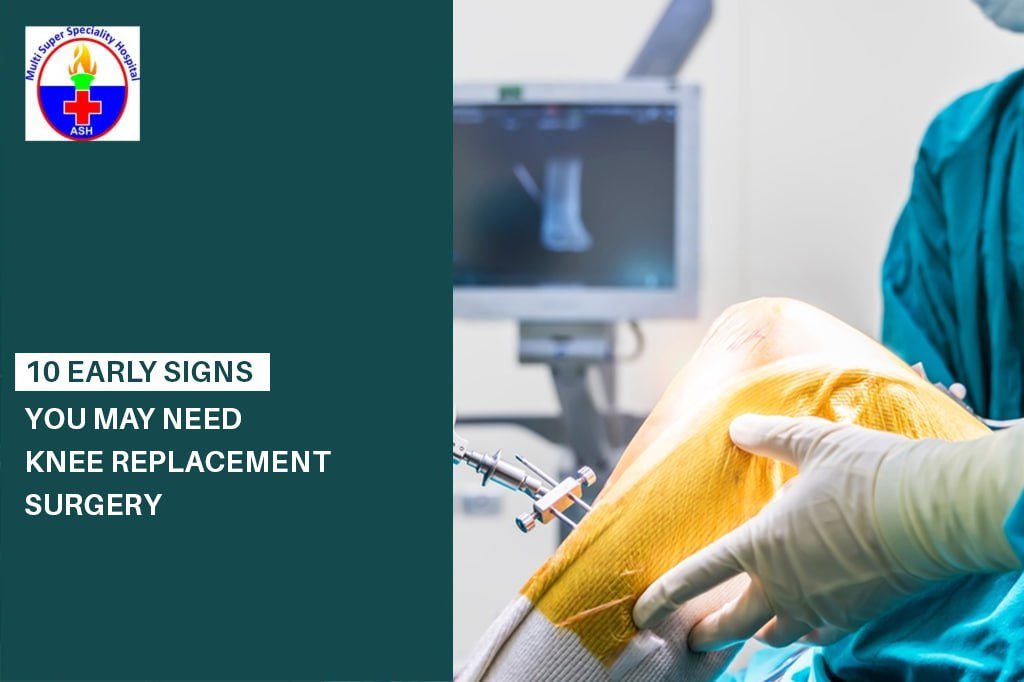
Knee pains are so common today not only among the elderly but also those in their 30s and 40s. Some of the factors that are contributing towards the escalation of knee problems include the long working hours, lack of physical activity, injuries, obesity, and wear with age. Though a given amount of pain is natural, persistent pain can make movement and overall living in the world more difficult.
This is the reason that it is crucial to identify it at the initial stages. By early identifying the symptoms, one avoids further damage and contributes to the long-term well-being of joints. Many individuals think of knee replacement surgery in Ahmedabad when it becomes hard to walk, climb up and down stairs or do any other daily chores.
The current paper is a non-diagnostic one. Instead, it indicates the indications of early diagnosis and the need to see an orthopedic surgeon in Ahmedabad or any other local specialist in this regard to be examined properly.
Understanding Knee Replacement Surgery
What the Procedure Involves
Surgery for knee replacement is performed in order to substitute the lost cartilage and bone with new materials made of metal and plastic. The sections resemble the movement of a natural joint and reduce frictional pain.
There are two main types:
Total knee replacement: It refers to the replacement of the whole knee joint.
Partial knee replacement: In this the damaged part is treated only.
Your doctor will advise you on the option of the one depending on the degree of damage of the joints.
Why It’s Considered
Doctors can recommend knee replacement in the following circumstances:
- Arthritis is a serious problem with mobility.
- It also brings about pains during walking or bending after long-term wear.
- Injuries are permanently degenerated.
- No longer effective are physiotherapy, medicines or injections.
The possibility of surgery would be possible when the conservative therapy proves ineffective.
10 Early Signs You May Need Knee Replacement Surgery
1. Persistent Knee Pain That Doesn’t Improve
Months of suffering in spite of the medication or rest and physiotherapy can be a warning sign. The pain may be sharp when the patient does such movement or dull and painful when the day arrives.
Constant pain is typically an indication that there is already severe damage done to the joints and that should be medically examined.
2. Difficulty in Walking or Climbing Stairs
As soon as the simple things like bending the knee or climbing stairs begin to hurt, the knee begins to feel weak or unsteady and this may be an indication that the joint is becoming poorer.
In the instances whereby cartilage wears down, leaving bone-on-bone contact, the symptoms are widespread.
3. Stiffness of the Knee, Especially in the Morning.
One of the common symptoms is the inability to straighten or bend your knee after sleeping and sitting in the same position. It is the gradual movement that can only help in relieving this stiffness.
4. Swelling or Inflammation That Keeps Returning
Repeated swelling or joint accumulation of fluid or heat after rest, ice, or use of medication may be the symptoms of the chronic joint problem.
This is normally an indication of arthritis or degenerative joint disease.
5. Grinding or Popping Sounds in the Knee
When the cartilages may be degenerating their presence is indicated when there is grinding, clicking or popping especially when the knee is being bent or straightened.
Such symptoms might require an orthopedic surgeon in Ahmedabad to rule out some dire type of joint degeneration.
6. Knee Deformity or Visible Misalignment
The knee may start bending towards its center (knock-knee) or towards the side (bow-legged). This alters the posture and puts a strain on the joint.
It is a type of misalignment that only worsens the pain, speeds up cartilage degradation and leads to even greater joint problems.
7. Pain Interrupts Sleep
Persistent pains of the knee at rest or when lying should give an indication of inflammation or degeneration of the joint in case of persistent pains.
Sleep-disturbing pain is usually associated with advanced arthritis.
8. Reduced Quality of Life
The inability to do the simplest activities, walk, sit in cross-legged postures, leave the chairs, etc., could be the sign of serious damage to the joints. Many people will start to avoid anything due to pain or fear of being injured.
9. Dependence on Medication Without Relief
In case the use of painkillers or anti-inflammatory drugs is already a necessity, or they no longer have an effect, one can contemplate other approaches to treatment.
It means that non-operative measures could no longer be effective.
10. Conservative Treatments Are No Longer Effective
We can get temporary reprieve through physiotherapy, braces, injections, exercise programs, alteration of lifestyle. However, in case none of these benefit further, there are possibilities of greater harm to the joints.
A specialist will be able to discuss the possibility of surgery as the following rational decision based on the state of the joint and its functionality.
When to Consult an Orthopedic Surgeon
Importance of Early Diagnosis
Delaying a consultation can allow the degeneration of the joints. Early diagnosis determines the nature of treatment that may either be conservative or surgical.
Local Context
In case of any long-term symptoms, one can consult an orthopedic surgeon in Ahmedabad and get to know whether you need to have surgery or whether you can still have an alternative treatment.
Conclusion
Knee problems identified at an early stage are a motivating factor for people to seek early advice. The knee pain might not be a condition that might require surgery but progressive and persistent pain may require the treatment of a doctor. The awareness of the first symptoms, the surgery procedure, and the knee replacement surgery cost will enable people to make knowledgeable and definite choices about their joint state.