
Age Limit for Knee Replacement Surgery – Is There a Right Age?
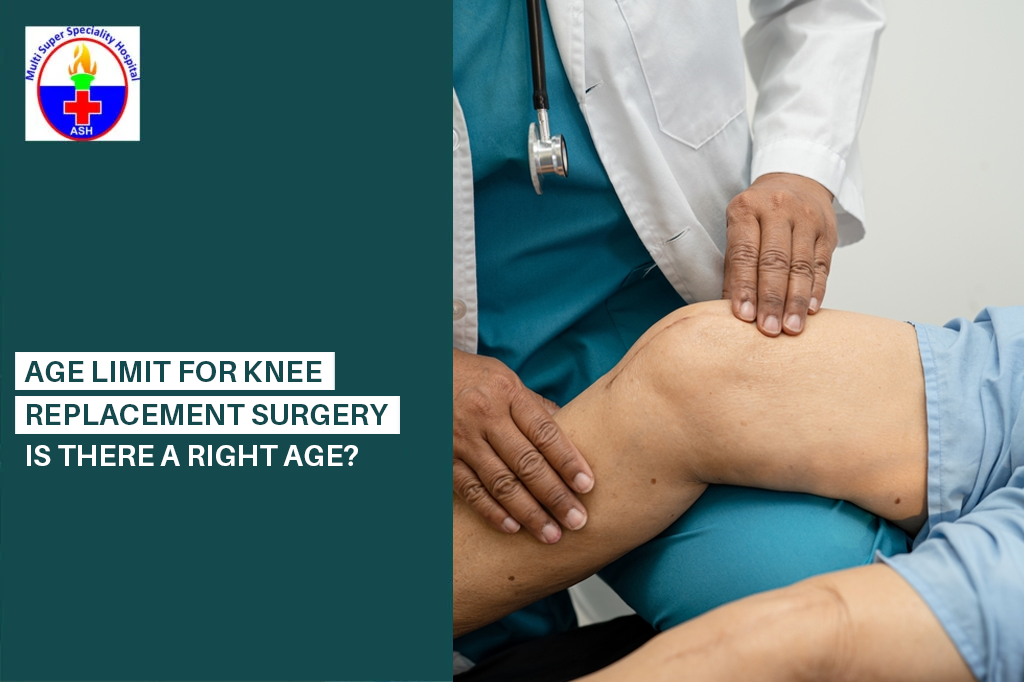
Knee pain is one of the most common musculoskeletal complaints affecting people in Ahmedabad and across India. For many, it starts as occasional discomfort when walking, climbing stairs, or standing for long periods. Over time, it can progress to persistent pain that affects daily life, sleep, and even mental well-being. When conservative treatments fail and pain becomes debilitating, knee replacement surgery often enters the conversation.
But a question that frequently arises — from patients, families, and caregivers alike — is: “Is there a right age for knee replacement surgery?” Is it just something older adults do, or can younger people consider it too? And at what point does age become a limiting factor rather than a benefit?
In this comprehensive guide, we will explore knee replacement surgery thoroughly, focusing on age considerations, clinical evidence, risks and benefits, real-world examples, and the factors that influence surgical decisions. Our goal is to inform, clarify misconceptions, and empower readers with clear answers rooted in research and practical experience — especially for people in Ahmedabad considering this important decision.
Understanding Knee Replacement Surgery
Knee replacement — also called knee arthroplasty — is a surgical procedure in which damaged parts of the knee joint are removed and replaced with artificial components made from metal and high-grade plastic. The goal is to relieve pain, restore function, and improve quality of life.
Over the past few decades, knee replacement has become one of the most successful and commonly performed orthopedic surgeries globally, including in India. Advances in surgical techniques, prosthetic materials, and rehabilitation protocols have made it safer and more effective than ever.
Traditionally associated with older adults, knee replacement is increasingly considered for younger individuals under certain circumstances — raising important questions about age, lifestyle, and long-term outcomes.
Is There a “Right” Age for Knee Replacement?
The short answer is: There is no universally fixed “right” age for knee replacement surgery. Rather, the decision depends on individual health, severity of symptoms, daily functional impact, and personal goals.
Historically, knee replacements were performed mostly in people aged 60 and above. However, recent trends show that the procedure is being offered to patients in their 50s and even late 40s, depending on circumstances.
But what drives the difference? Let’s explore.
Why Age Alone Shouldn’t Determine Eligibility
Age is just one factor among many that doctors consider. More important than calendrical age is biological age — a reflection of overall health, activity level, weight, bone quality, and joint condition.
Many younger patients with severe osteoarthritis (the most common indication for knee replacement) may experience pain and disability that significantly impairs daily life. For these individuals, knee replacement can be life-changing.
Conversely, some older adults may maintain an active lifestyle with mild symptoms and excellent function. For them, non-surgical treatments may be preferable initially.
So rather than a strict age threshold, surgeons focus on a holistic assessment of the individual’s overall health and needs.
How Age Affects Knee Replacement Outcomes
Although age itself is not a strict cutoff, it does influence certain aspects of knee replacement surgery and recovery.
Younger patients (40s–50s):
- Tend to have higher activity expectations post-surgery
- May wear out prosthetic components sooner because of higher physical demands
- May benefit from less invasive surgical techniques and modern implant materials
- Often recover mobility faster but need long-term planning because of life expectancy
Older patients (70s and above):
- Often have co-existing health conditions like diabetes, hypertension, or heart disease
- May need more careful peri-operative assessment
- Traditional knee replacements have shown excellent pain relief and functional improvement
- Rehabilitation goals may focus more on independence rather than high-impact activity
Neither group is inherently “too young” or “too old.” Instead, the suitability of surgery is determined by how much pain and dysfunction the knee causes, and whether the individual’s health profile supports surgery and recovery.
When Is Knee Replacement Recommended?
Knee replacement surgery is most commonly recommended for people who:
- Have severe osteoarthritis or joint degeneration that interferes with daily function
- Experience constant pain even at rest or during sleep
- Have failed to find relief from non-surgical treatments like physical therapy, medications, or injections
- Notice significant limitation in mobility — such as difficulty walking, climbing stairs, or standing for long periods
- Have X-ray evidence of joint damage that correlates with symptoms
Importantly, symptom severity and impact on quality of life matter more than age alone.
For example, two patients might both be 55 years old. One may have mild discomfort managed with therapy, while the other experiences debilitating pain that prevents work or basic activities. The latter is a more suitable candidate for knee replacement regardless of age.
Common Causes of Severe Knee Pain
Several conditions may lead to the need for knee replacement surgery:
- Osteoarthritis: Degenerative wear-and-tear of cartilage
- Rheumatoid arthritis: Autoimmune inflammation
- Post-traumatic arthritis: Result of old injuries
- Avascular necrosis: Reduced blood supply to bone
- Deformity (bow-legs or knock-knees) leading to imbalance
The severity and progression of these conditions vary by person — and not directly by age alone.
Benefits of Knee Replacement Surgery
Knee replacement surgery — when appropriately indicated — offers several life-enhancing benefits:
1. Significant Pain Relief
The most immediate and meaningful benefit for many patients is relief from pain that no longer responds to medication or therapy.
2. Improved Mobility and Function
Patients frequently report improved ease of walking, climbing stairs, and engaging in daily activities that were previously painful or avoided.
3. Better Sleep and Emotional Well-being
Chronic knee pain can affect sleep quality and overall mood. Relief often leads to better rest and enhanced emotional health.
4. Reduced Dependency on Pain Medications
Many people depend on analgesics or anti-inflammatory drugs for years. Successful knee replacement reduces this dependence, lowering side effect risks.
5. Enhanced Quality of Life
With reduced pain and improved mobility, patients often return to hobbies, social activities, and travel that had been limited by knee issues.
Challenges and Considerations
While knee replacement offers significant benefits, it is not without challenges — and some are related to age.
Higher Expectations in Younger Patients
Younger individuals often expect to return to high-impact sports or activities like running. Traditional knee replacements are designed to restore pain-free walking and daily function, but high-impact activity may shorten implant life.
Surgeons work with patients to set realistic expectations while encouraging safe, low-impact activities like swimming, cycling, or walking.
Longevity of Implants
Modern knee replacements can last 15–20 years or more, but a younger patient (e.g., in their 40s) is likely to live long enough to require a revision later in life. This is a consideration, not a contraindication, but it underscores the importance of long-term planning.
Revision surgeries are more complex than primary knee replacements, so discussions about future needs are part of the decision-making process.
Age-Related Health Factors
Older adults may have other health conditions that influence recovery — such as diabetes, heart disease, or decreased bone density. A comprehensive pre-operative evaluation helps determine readiness and minimize risk.
Real-World Examples
Understanding how age factors into the decision can be best illustrated through real-life scenarios.
Case 1: Active 52-Year-Old
A 52-year-old school teacher from Satellite Road began experiencing progressive knee pain. Despite therapy, medication, and lifestyle modifications, she struggled to walk her children to school or enjoy weekend activities. Imaging showed advanced osteoarthritis.
Although younger than traditional knee replacement age, surgery was recommended after careful assessment of her symptoms, activity needs, and overall health. She opted for knee replacement. Post-surgery, her pain resolved, mobility improved significantly, and she resumed activities she had long avoided.
Case 2: 75-Year-Old Retiree
A 75-year-old retired engineer living near Vastrapur had decades of knee discomfort. She could barely walk short distances and relied on pain medications that upset her stomach. After comprehensive evaluation, age was not considered a barrier. Her overall health supported surgery, and she experienced excellent pain relief and functional improvement.
These examples show that age per se is not the deciding factor — but symptoms, health status, and personal goals are central to the decision.
How the Decision Is Made
Deciding on knee replacement follows a systematic approach:
- Clinical Evaluation: Detailed history and physical examination
- Imaging Tests: X-rays and, if needed, MRI to assess joint damage
- Non-surgical Treatment Trial: Pain relief, therapy, lifestyle changes tried first
- Functional Assessment: How much symptoms limit activities
- Patient Expectations and Goals: Personalized discussion
- Pre-operative Health Check: Heart, kidney, metabolic evaluations
After this process, if knee replacement is seen as the best option to improve quality of life, surgery is planned with a personalised rehabilitation plan.
What Happens During Surgery
Without getting overly technical, modern knee replacement uses advanced prosthetic components to replace damaged parts of the joint. Most procedures today are:
- Precisely planned with imaging support
- Done under safe anaesthesia
- Followed by early mobilisation
- Supported by structured rehabilitation
Surgeons in Ahmedabad often use technology like computer-assisted navigation or patient-specific instruments to enhance precision and outcomes.
Recovery and Rehabilitation
Recovery is a partnership between the surgical team and the patient. Early movement starts within hours of surgery to prevent stiffness, improve circulation, and begin strength rebuilding.
Physical therapy is a cornerstone of the recovery process — and often more important than the surgical technique itself. Compliance with rehab plans accelerates healing and functional gains.
Common Misconceptions
“Knee Replacement Is Only for the Elderly”
Wrong. Age is not a barrier when symptoms and clinical indications support surgery.
“It Means I Won’t Be Active Again”
Modern implants allow for a life with reduced pain and improved daily function. However, high-impact sports may be discouraged to preserve implant longevity.
“The Risk Is Too High at My Age”
Risk exists at any age, but with careful assessment and modern anaesthesia, many patients — young and old — safely undergo knee replacement with excellent results.
Is Knee Replacement Expensive? What Do Patients in Ahmedabad Need to Know?
Cost is often a concern. In Ahmedabad, a major medical hub, knee replacement costs vary depending on the hospital, implant quality, surgeon experience, and services included.
However, many patients find that the long-term benefits of reduced pain, improved function, and reduced medication costs justify the investment.
Insurance coverage, government schemes, and payment plans often help make surgery more accessible.
Final Thoughts
So, is there a right age for knee replacement surgery?
The answer is nuanced: There is no strict age limit. What matters most is the individual’s functional impairment, pain severity, overall health, and personal goals. Age may influence certain considerations, but it should never be the sole deciding factor.
Whether you are 45 or 85, the real questions are:
- How much is knee pain affecting your life?
- Have you tried and failed conservative therapies?
- Are you ready to commit to recovery and rehabilitation?
- Does your overall health support a safe and successful outcome?
If the answers point toward significant impact and you are seeking a sustained improvement in quality of life, knee replacement could be the right option — regardless of age.
For personalized evaluation, careful planning, and expert care tailored to your needs, considering options with an experienced orthopedic surgeon in Ahmedabad can provide clearer direction.
If you’re in Ahmedabad or nearby and wondering whether knee replacement is right for you, talk to an orthopedic specialist who can assess your individual situation compassionately and clinically.
Here’s to pain-free movement and a better quality of life.
— Dr Rishi Sanghavi