
Knee Replacement Surgery Guide: Types, Cost & Recovery
Knee pain is one of the most common health problems people face as they grow older. Some people feel pain after walking for a long time. Others feel pain while climbing stairs or even while sleeping. In many cases, simple treatments such as medicines or exercises help. But sometimes the pain becomes too severe and daily life becomes difficult. When medicines don’t work and the pain doesn’t go away, a doctor may suggest knee replacement surgery.
Knee replacement surgery can feel scary to think about, especially if you have never heard much about it. Many people have questions like: What types of knee replacement are there? How much does it cost? How long will it take to recover? How will my life change after the surgery? This guide explains everything in clear and simple words so you can understand knee replacement surgery completely and make good decisions.
What Is Knee Replacement Surgery?
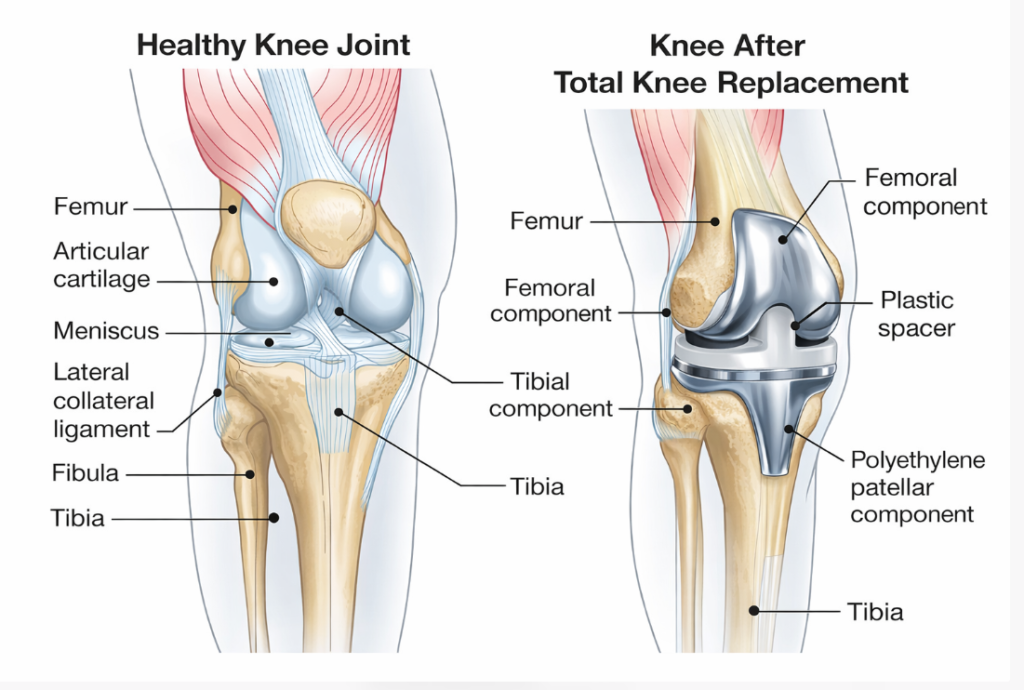
The knee is a major joint in the human body, playing a crucial role by linking the femur to the tibia. A smooth layer of cartilage covers the ends of these bones so that they can move easily without pain. When this cartilage wears out due to age, injury, arthritis, or other reasons, the bones start rubbing against each other. This leads to discomfort, joint stiffness, swelling, and reduced mobility.
Knee replacement surgery is a medical procedure in which the damaged parts of the knee joint are removed and replaced with artificial parts made of metal and plastic. The main goal of this surgery is to reduce pain, improve movement, and help you get back to your daily activities.
Why Is Knee Replacement Surgery Needed?
Knee replacement surgery is not done for simple or occasional knee pain. It is usually recommended when:
- The discomfort is intense and persistent, occurring even when at rest.
- Medicines, injections, and therapy no longer help.
- Walking and other daily activities become very difficult.
- The knee joint is badly damaged due to osteoarthritis, rheumatoid arthritis, injury, or deformation.
When the knee stops working well and affects your lifestyle, surgery becomes the best option for long-term relief.
Types of Knee Replacement Surgery
There are several types of knee replacement surgery. Each type is chosen based on how much of the knee is damaged and what the patient needs.
1. Total Knee Replacement (TKR)
Total knee replacement is the most common type. In this surgery, the entire damaged knee joint is replaced with an artificial joint. The end of the thigh bone and the top of the shin bone are shaped to fit the new parts. A plastic piece is placed in between to allow smooth movement.
Total knee replacement is usually recommended when the damage is widespread in the knee and pain affects most daily activities.
2. Partial Knee Replacement (PKR)
In partial knee replacement, Only the injured section of the knee is surgically replaced. This is done when the damage is limited to one small area of the knee. The rest of the knee remains natural. Because only part of the knee is replaced, recovery may be faster, and the surgery may be shorter.
This type is good for people whose damage is not severe or widespread.
3. Revision Knee Replacement
Revision knee replacement is done when a previous knee replacement wears out or develops problems. Over time, artificial knee parts can become loose or painful. In such cases, the surgeon removes the old artificial joint and replaces it with a new one.
Revision surgery is more complex than primary knee replacement and usually requires experienced surgeons.
4. Complex or Custom Knee Replacement
Some patients have unusual knee shapes or very severe damage that requires special surgical planning. In such cases, a custom-designed knee replacement may be made specifically for the patient. This type is less common but helpful for people with unique knee problems.
How Is Knee Replacement Surgery Performed?
Knee replacement surgery is usually done in a hospital under anesthesia, so you do not feel pain during the operation.
Initially, the surgeon creates a surgical cut in the knee area. Next, the surgeon meticulously clears away the injured cartilage and bone. The ends of the bones are shaped to fit the artificial parts. These parts are then fixed in place.The incision is then secured using sutures or surgical clips.
The operation usually takes about one to two hours, but it can vary depending on the type of surgery and the patient’s health.
Who Is a Good Candidate for Knee Replacement?
Not everyone with knee pain needs this surgery. A doctor will recommend surgery when other treatments have failed. Good candidates are people who:
- Have severe knee pain affecting daily life.
- Have tried medicines, therapy, and injections without relief.
- Have difficulty walking or climbing stairs.
- Have lost the ability to do normal activities.
Age alone is not a deciding factor. Many people in their 50s, 60s, or even younger can benefit from knee replacement if their knee condition is serious.
Preparing for Knee Replacement Surgery
Before surgery, the doctor will do several tests such as X-rays, blood tests, and physical exams. These help the surgeon understand the knee’s condition and overall health.
Patients may be advised to stop certain medicines a few days before the operation. It is also helpful to start light exercises to strengthen the muscles around the knee. Many surgeons ask patients to lose extra weight to reduce stress on the new knee.
It’s also important to prepare your home. Having things like a chair with support, easy shoes, and a clean path to move around can make recovery easier.
Cost of Knee Replacement Surgery
The cost of knee replacement surgery depends on many factors, including:
- The type of knee replacement (total, partial, revision, custom).
- The hospital chosen (government, private, or specialty hospital).
- The city or country where the surgery is done.
- The type of implant used (standard, high-performance, custom-made).
- Doctor and anesthesia fees.
- Hospital stay duration.
In many countries, knee replacement surgery includes the cost of the implant, hospital charges, surgeon’s fee, tests, medicines, and rehabilitation. In public or government hospitals, the cost may be lower or subsidized. Treatment expenses tend to be greater in privately owned hospitals. Many health insurance plans also cover part or all of the surgery cost.
While cost is important, the decision should also consider the quality of care, surgeon’s experience, and rehabilitation support.
Recovery After Knee Replacement Surgery
Recovery is one of the most important parts of knee replacement surgery. Most people start moving their knee on the same day or the next day after surgery. Walking with the help of a walker, crutches, or cane begins soon to prevent stiffness.
Physiotherapy is key to recovery. Exercises help strengthen muscles, improve flexibility, and make the new knee work well. At first, exercises are gentle. Over time, they become more intense as strength and movement improve.
Most people can walk independently without support within three to six weeks. Full recovery may take three to six months, and in some cases up to a year. Every patient’s recovery speed is different, and following the doctor’s guidance helps the process.
Activities After Surgery
After knee replacement surgery, several daily activities become easier. Many people can walk, climb stairs, sit, stand, and do household work without pain. Some patients even return to low-impact sports like swimming or cycling.
However, high-impact activities like running or jumping are usually not recommended because they may put stress on the new knee.
Regular follow-up with the doctor and continued exercises help the knee last longer and work better.
Common Questions People Ask About Knee Replacement Surgery
Many people have questions and fears about this surgery. Here are simple answers to common concerns.
- Does knee replacement surgery hurt?
During the surgery, you will not feel pain because of anesthesia. After the operation, some discomfort is normal, but pain medications and therapy help control it.
- Will I walk normally after surgery?
Most people walk much better after recovery with less pain. The goal is to improve movement and quality of life.
- How long does the artificial knee last?
Modern artificial knees are very strong. They often last 15–20 years or more, especially if you follow exercise and weight-control advice.
- Is this surgery safe?
Knee replacement is a common and generally safe surgery. Like any surgery, there are risks, but doctors take many steps to reduce them.
Risks and Complications
Although knee replacement surgery is safe for most people, some risks exist. These can include infection, bleeding, blood clots, implant loosening, or reaction to anesthesia. However, severe complications are rare.
Doctors take careful safety steps before, during, and after surgery to reduce problems. Regular follow-up visits help catch any issues early.
Tips for a Successful Recovery
Recovery is a shared effort between you and your healthcare team. Some tips that help include:
- Following the exercise and therapy plan every day.
- Keeping the surgical area clean and dry.
- Eating nutritious food to support healing.
- Avoiding smoking and alcohol.
- Taking care of yourself with patience and positivity.
Each small step in recovery adds up to big improvements over time.
Why Knee Replacement Surgery Matters
Knee replacement surgery is more than just an operation. It can reduce years of pain, restore comfort, and help people enjoy life again. Many patients return to walking, playing with grandchildren, gardening, or traveling after recovery.
Pain that once controlled your life can become a memory, and life after surgery can be active and joyful.
Final Thoughts
Knee replacement surgery is a major decision, but it is one of the most successful surgeries in modern medicine. Knowing the types of surgery, understanding the cost, and preparing for recovery helps you take control of your health.
If you or someone you love has severe knee pain that does not improve with treatment, talk to an orthopedic surgeon. Early advice can make the entire process smoother and increase the chances of a good outcome.
Remember, knee replacement surgery is not just about treating pain. It is about restoring movement, independence, and a better quality of life.