
Author name: dr-rishi

Hip Joint Pain That May Lead to Replacement
Hip Replacement

Common Causes of Hip Joint Pain That May Lead to Replacement

Common Causes of Hip Joint Pain That May Lead to Replacement Think of your body as a high-performance car. The hip joints are no doubt the chassis and suspension, should the engine be your heart. They become the victims of all your actions, all the steps you take, all the stairs you use, and all the moments you sit to have a meal with your family. But what will become of that suspension when it starts to fail? Hip aches do not happen in case of a sore muscle. It is usually a complicated message from your body that something inside the joint is transforming. This pain becomes a partner to many of them, and at some point, one may want to discuss a Total Hip Replacement (THR). We think that an educated patient is a patient who is healed at Anand Surgical Hospital Pvt. Ltd. We will discuss surgery later but first we will look at the frequent causes of patients visiting our doors. Anatomy of The Ball and Socket Pain cannot be known without knowing the machinery. Hip is a ball-and-socket joint. A socket is the part of your pelvis known as the acetabulum, and a ball is the femur head (top of your thigh bone). In a healthy hip, the surfaces are lined with a rubbery liquid called articular cartilage which provides the bones with a lubricated surface enabling them to move across each other easily without friction. When such cartilage becomes thin, the cushion disappears. This leaves the bone-on-bone interaction that is the major cause of the debilitating pain causing joint replacement. 1. Osteoarthritis: The Great Wear-and-Tear Osteoarthritis (OA) is the most prevalent cause of hip replacement in the entire world. OA is also known as degenerative joint disease and it is caused by years of mechanical stress. The cartilage may also start tearing and wearing out as we get old. Imagine it as the tread on a tire, at some point, the smooth part does not exist anymore. 2. Avascular Necrosis (AVN): The Silent Bone Death Avascular necrosis is increasing tremendously in India especially in younger and middle-aged adults. AVN stops blood flow to the “ball” (femoral head). In the absence of blood, the bone tissue perishes and starts collapsing. 3. Post-Traumatic Arthritis There are cases when the shade of some past injury returns to plague you. The articular cartilage can be damaged immediately as a result of a severe hip fracture or a fall as a result of a road accident. The joint surface might not be utterly smooth even when the fracture is healed. This irregularity with time results in fast wear and tear to an extent resulting in post-traumatic arthritis. 4. Hip Dysplasia and Childhood Conditions People are born with hips that are not perfectly shaped, a situation known as Developmental Dysplasia of the Hip (DDH). When the socket is superficial, the ball does not have the support that it should hold and therefore extreme pressure is exerted on a limited area of cartilage. This will lead to the joint wearing out within a considerably shorter time than usual, with a hip replacement in one’s 30s or 40s being a frequent occurrence. How Do You Know If You’re Ready for Surgery? Being on a scan with arthritis does not necessarily imply that you have to go under the scalpel. Nonetheless, you are to consult when you experience: Why the “Gold Medalist” Approach Matters Hip replacement is an operation that is very successful. However, its durability is solely based on accuracy. The legs should be the same length as the ball so that the joint does not dislocate, it is also necessary that the ball be positioned at the exact angle. Here experience is your biggest asset. Dr. Rishi Sanghavi has the experience of being an MS (Ortho) Gold Medalist, which implies that he takes a strong academic grip of biomechanics in each surgery. After having done more than 7,000 orthopedic operations, he possesses the surgical subtlety to approach a complex case, such as a bone graft to AVN or a dysplasia repair. Reclaiming Your Pivot The pain in hips is an indicator, but not a death sentence. Be it the gradual development of osteoarthritis that causes you discomfort or the abrupt hit of AVN, it is possible to find a way that will lead you to an active life thanks to modern orthopedic science. You can have a surgeon who is technically brilliant and one who cares by choosing a surgeon who balances both. Hence, what you have now is a new hip which will serve you many decades to come. Allow hip pain no longer to be a delimiting factor. When stiffness or limping is dragging you down, then it is time to talk to an expert. Contact Dr. Rishi Sanghavi!

Orthopedic Surgeon for Knee or Hip Pain
Orthopedic

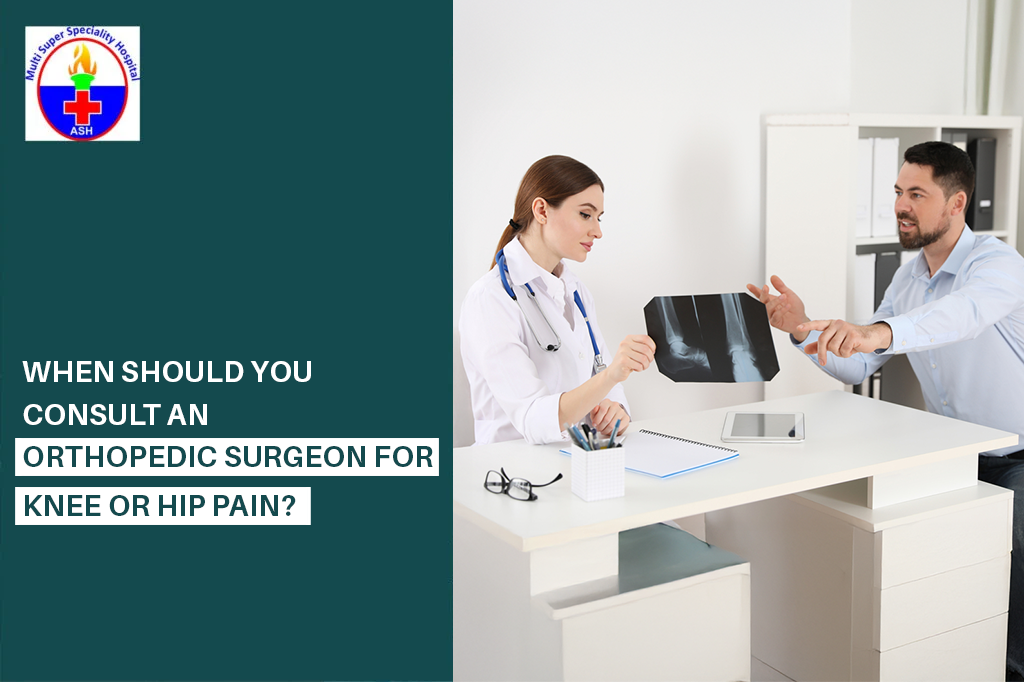
When Should You Consult an Orthopedic Surgeon for Knee or Hip Pain?

When Should You Consult an Orthopedic Surgeon for Knee or Hip Pain? Knee and hip pain are among the most common complaints people have as they age, stay active, or recover from injuries. Sometimes this pain is minor and passes with a bit of rest. Other times, it can be persistent, limiting daily activities and affecting quality of life. Knowing when to see a specialist — specifically an orthopedic surgeon — can make a huge difference in recovery, long-term mobility, and overall well-being. In a city like Ahmedabad, with its hot climate, high activity levels, and large aging population, many people experience joint discomfort. But not all pain requires surgical intervention, and not all can be managed by general physicians alone. This blog will help you understand when it’s truly time to consult an orthopedic surgeon for knee or hip pain, how these specialists work, what you can expect, and how timely action can prevent complications. Understanding What Orthopedic Surgeons Do An orthopedic surgeon is a medical doctor trained to diagnose, treat, and manage conditions related to the musculoskeletal system — this includes bones, joints, muscles, tendons, ligaments, and nerves. They treat a wide array of conditions, from fractures and sports injuries to arthritis and chronic joint problems. Orthopedic doctors can offer both non-surgical and surgical treatments depending on the condition. In the context of knee and hip pain, their role involves diagnosing the source of pain accurately and determining the most effective course of action — whether conservative management like medication and physiotherapy, or surgical options like arthroscopy or joint replacement. Why Early Consultation Matters It’s easy to dismiss knee or hip pain as “just aging” or “a part of getting older,” but that approach can lead to delays in diagnosis and treatment, which sometimes results in worsening symptoms, reduced mobility, or more invasive surgery later on. Many musculoskeletal issues worsen over time if left unchecked, especially if they interfere with daily activities like walking, climbing stairs, or standing for long periods. Waiting until the pain is unbearable often means more complicated treatment and longer recovery. In many cases, early consultation with an orthopedic surgeon can minimize long-term damage and improve outcomes significantly. Common Causes of Knee and Hip Pain Understanding the cause of pain helps in knowing when to seek specialized care. Knee and hip pain can arise from: Some of these conditions are temporary and respond to rest, physiotherapy, or medications, while others benefit from early specialist assessment to prevent progression. Signs It’s Time to See an Orthopedic Surgeon Simply having some stiffness or occasional ache doesn’t always mean urgent specialist care. But there are specific signs and symptoms that strongly suggest you should consult an orthopedic surgeon. 1. Pain That Persists or Gets Worse Despite Home Care Many people try home remedies — rest, ice, NSAIDs (anti-inflammatory medications), and gentle exercise — as their first step. However, if pain persists for more than 4–6 weeks, or if it progressively worsens even after trying home care, it’s a sign that deeper evaluation is needed. Pain that begins subtly but doesn’t get better over time, or morning stiffness that lingers longer than expected, may signal degenerative changes in the joint like early osteoarthritis. 2. Pain That Limits Daily Activities If knee or hip pain interferes with simple tasks — walking, climbing stairs, getting up from a chair, tying shoelaces, sitting comfortably — it’s not “normal discomfort.” Limitations in daily living activities often indicate that the pain is affecting joint function, and this should prompt a specialist consultation. 3. Swelling, Redness, or Warmth Around the Joint Joint swelling that doesn’t go away, especially when accompanied by redness, warmth, or tenderness, may point to inflammation or infection. Conditions like bursitis, gout, or joint infections require medical evaluation and early treatment to prevent further damage. 4. Difficulty Bearing Weight or Instability Pain that makes it difficult to stand, walk, or put weight on your leg is a clear signal that something is not right. Whether due to structural damage, ligament instability, or joint deterioration, this kind of pain should be assessed by an orthopedic specialist as soon as possible. In some situations — such as after a fall — immediate evaluation is necessary. 5. Limited Range of Motion If you find you can’t bend or straighten your knee fully, or hip movement is stiff despite warm-ups and gentle movement, this restriction could mean cartilage, tendon, or joint capsule problems. Restricted movement often accompanies joint degeneration and can lead to compensatory issues in the lower back or opposite leg if uncorrected. 6. Pain at Rest or at Night Pain that wakes you from sleep or persists even when you’re at rest is more serious than simple “muscle soreness.” This type of pain warrants specialist evaluation because it may signal deeper structural or inflammatory problems that need targeted treatment. 7. Symptoms Following an Injury or Accident Any serious fall, direct impact, or twist that results in significant knee or hip pain—especially if accompanied by swelling, a popping sound at the time of injury, or difficulty moving immediately afterward—should be evaluated promptly. These could be signs of ligament tears, cartilage damage, or even fractures. 8. Numbness or Tingling While numbness can sometimes be confused with simple tingling, true persistent numbness or radiating sensations down the leg may indicate nerve involvement. Nerve issues are best evaluated by an orthopedic specialist to differentiate between joint, spine, or nerve root problems. How an Orthopedic Surgeon Evaluates Your Problem When you visit an orthopedic surgeon, they don’t simply look at pain levels. The evaluation usually involves: Some orthopedic surgeons also perform diagnostic tests themselves to determine cartilage wear, ligament integrity, or alignment issues. This thorough evaluation is designed to pinpoint the root cause of pain rather than just treat symptoms. What Treatments an Orthopedic Surgeon May Recommend Seeing an orthopedic surgeon doesn’t automatically mean surgery. In fact, many joint issues are successfully managed with non-surgical methods first. These can include: If non-surgical methods don’t provide adequate relief,

Hip Replacement
Hip Replacement

Life After Hip Replacement: Mobility & Precautions

Life After Hip Replacement: Mobility & Precautions Surgery to replace hips can be life-changing to individuals who have endured years of pain, stiffness and reduced movement of the hip. In the modern world with improved surgery and rehabilitation, most patients are returning to a normal active and independent life following surgery. Nevertheless, the operation theater is not the end of the road to recovery. Long-term success is largely dependent on the ability to understand the expectation and precaution to be taken after hip replacement. As more and more patients have started to choose hip replacement surgery in Ahmedabad, the issue of patient education has become significant because patients need to know more about what they should do, what they should not do and how they should secure the new joint that is going to serve them in the coming years. What Happens After Hip Replacement Surgery? In the hip replacement surgery, the broken components of the hip joint are substituted with artificial parts that move freely and alleviate pain. The surrounding muscles, tendons, and soft tissues do not heal overnight, as the implant also offers structural support at that moment. The Healing Timeline The rate at which this recovery happens also depends on age, general health, fitness and adherence to the guidelines on recovery. Mobility After Hip Replacement: What to Expect Walking After Surgery Walking normally starts within a day or two of surgery with the help of a walker or crutches. This early movement assists in the prevention of stiffness and it enhances blood circulation. In a few weeks, the patients will use the walkers then canes and later walk without any aid. It is important to be in correct posture. Walking straight back, no limping and having the weight evenly distributed helps in protecting the new hip joint. Sitting, Standing, and Daily Movements Even such skills as sitting and standing need to be considered during the early recovery period: The patients are usually told to avoid low seating and sitting on the floor, at least in the first few months. Returning to Normal Activities Most patients can: The gradual and planned movements also allow an easier recovery. Essential Precautions After Hip Replacement Movements to Avoid In order to inhibit the dislocation or destruction of the implant: These are the precautions that should be taken particularly during the initial 6-12 weeks. Sleeping Positions The most secure position to sleep in is lying on the back, or lying on the side but with a pillow in-between the legs. This maintains the hip and minimizes the joint strain. Preventing Falls One of the largest postoperative risks is falls. The risk can be reduced to simple measures such as the use of non-slip mats, handrails in the bathroom, and supportive footwear. Role of Physiotherapy & Rehabilitation Physiotherapy is not a choice; it is a necessity. Why Physiotherapy Matters Rehabilitation helps: Those patients who adhere to the programs of physiotherapy always recover sooner and regain their confidence sooner. Common Exercises Rehab usually includes: Physiotherapy should not be neglected since it may result in stiffness, weakness, and delayed recovery. Lifestyle Changes for Long-Term Hip Health Weight Management Being overweight is a factor that puts more pressure on the hip joint and has the potential of decreasing the life of the implants. This is because a healthy weight maintained by diet and exercise helps to preserve the artificial joint. Connection Between Hip, Knee, and Spine Health There are hardly any cases of hip problems alone. Knee or lower back pain is also common in many patients who have undergone hip replacement. Knee Health Considerations Disturbed gait in the pre-operative period would tend to stress out the knees. That is why, during orthopedic consultations many of the patients also ask about the knee replacement cost in Ahmedabad. Hip position is also a problem that may be alleviated to help knee pain. Spine-Related Pain In other situations, the pain that may be believed to be due to the hip may in fact be due to the spine. More complex procedures such as the endoscopic spine surgery in Ahmedabad are now offered to patients with nerve compression or disc problems. Proper diagnosis means the appropriate method of treatment. FAQs What is the longevity of hip replacement? The implants used nowadays generally last 15-20 years or more, depending on the intensity of activity and weight. Is it possible to sit on the floor after having hips replaced? Floor sitting is not encouraged in most instances because of the likelihood of dislocation. What about post-operative travel? The safe period of short trips is typically 4-6 weeks. Travel is not expected to be long. Is hip replacement safe for elderly patients? Yes. Hip replacement is now deemed safe even in old patients as long as it is done using the modern procedures and proper medical analysis. Regaining Confidence, Step by Step Hip replacement life can be energetic, comfortable, and a good life, but only when patients know about mobility rules and respect all the required precautions. Starting with walking safely and completing physiotherapy to changing lifestyles, all the steps will help in the protection of the new joint. In case an individual in Ahmedabad is considering hip replacement surgery and wants the services of the best orthopedic surgeon in Ahmedabad, Dr. Rishi Sanghavi at Anand Surgical Hospital Pvt. Ltd. will offer the patient the best combination of surgical experience and expertise in joint replacement to help them regain painless mobility with successful and lasting results.  

Knee Replacement Surgery
Knee Replacement

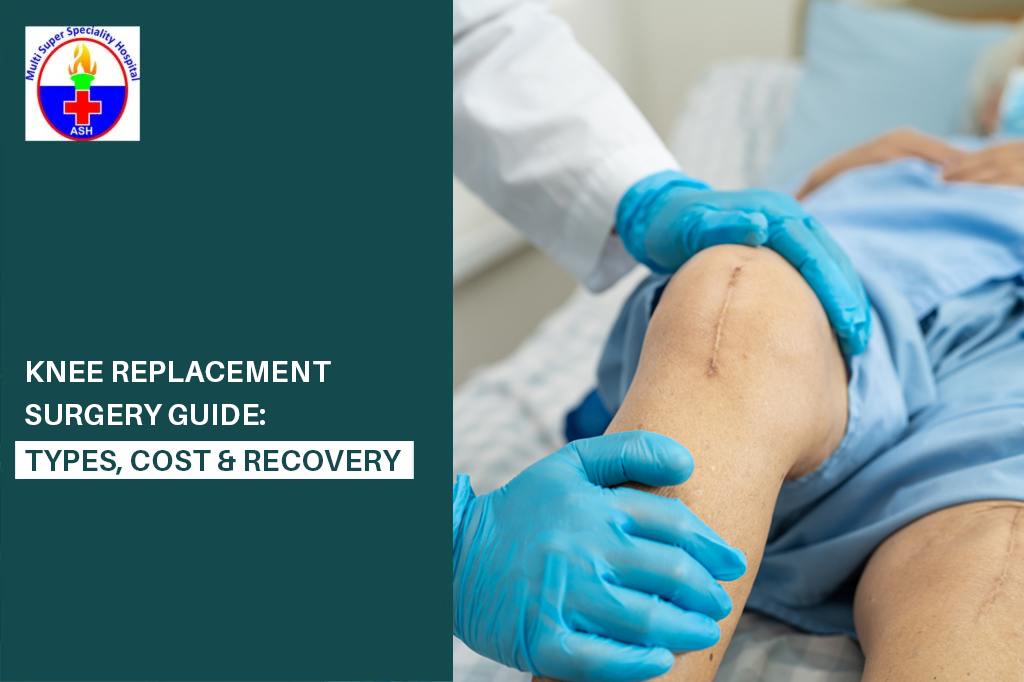
Knee Replacement Surgery Guide: Types, Cost & Recovery

Knee Replacement Surgery Guide: Types, Cost & Recovery Knee pain is one of the most common health problems people face as they grow older. Some people feel pain after walking for a long time. Others feel pain while climbing stairs or even while sleeping. In many cases, simple treatments such as medicines or exercises help. But sometimes the pain becomes too severe and daily life becomes difficult. When medicines don’t work and the pain doesn’t go away, a doctor may suggest knee replacement surgery. Knee replacement surgery can feel scary to think about, especially if you have never heard much about it. Many people have questions like: What types of knee replacement are there? How much does it cost? How long will it take to recover? How will my life change after the surgery? This guide explains everything in clear and simple words so you can understand knee replacement surgery completely and make good decisions. What Is Knee Replacement Surgery? The knee is a major joint in the human body, playing a crucial role by linking the femur to the tibia. A smooth layer of cartilage covers the ends of these bones so that they can move easily without pain. When this cartilage wears out due to age, injury, arthritis, or other reasons, the bones start rubbing against each other. This leads to discomfort, joint stiffness, swelling, and reduced mobility. Knee replacement surgery is a medical procedure in which the damaged parts of the knee joint are removed and replaced with artificial parts made of metal and plastic. The main goal of this surgery is to reduce pain, improve movement, and help you get back to your daily activities. Why Is Knee Replacement Surgery Needed? Knee replacement surgery is not done for simple or occasional knee pain. It is usually recommended when: When the knee stops working well and affects your lifestyle, surgery becomes the best option for long-term relief. Types of Knee Replacement Surgery There are several types of knee replacement surgery. Each type is chosen based on how much of the knee is damaged and what the patient needs. 1. Total Knee Replacement (TKR) Total knee replacement is the most common type. In this surgery, the entire damaged knee joint is replaced with an artificial joint. The end of the thigh bone and the top of the shin bone are shaped to fit the new parts. A plastic piece is placed in between to allow smooth movement. Total knee replacement is usually recommended when the damage is widespread in the knee and pain affects most daily activities. 2. Partial Knee Replacement (PKR) In partial knee replacement, Only the injured section of the knee is surgically replaced. This is done when the damage is limited to one small area of the knee. The rest of the knee remains natural. Because only part of the knee is replaced, recovery may be faster, and the surgery may be shorter. This type is good for people whose damage is not severe or widespread. 3. Revision Knee Replacement Revision knee replacement is done when a previous knee replacement wears out or develops problems. Over time, artificial knee parts can become loose or painful. In such cases, the surgeon removes the old artificial joint and replaces it with a new one. Revision surgery is more complex than primary knee replacement and usually requires experienced surgeons. 4. Complex or Custom Knee Replacement Some patients have unusual knee shapes or very severe damage that requires special surgical planning. In such cases, a custom-designed knee replacement may be made specifically for the patient. This type is less common but helpful for people with unique knee problems. How Is Knee Replacement Surgery Performed? Knee replacement surgery is usually done in a hospital under anesthesia, so you do not feel pain during the operation. Initially, the surgeon creates a surgical cut in the knee area. Next, the surgeon meticulously clears away the injured cartilage and bone. The ends of the bones are shaped to fit the artificial parts. These parts are then fixed in place.The incision is then secured using sutures or surgical clips. The operation usually takes about one to two hours, but it can vary depending on the type of surgery and the patient’s health. Who Is a Good Candidate for Knee Replacement? Not everyone with knee pain needs this surgery. A doctor will recommend surgery when other treatments have failed. Good candidates are people who: Age alone is not a deciding factor. Many people in their 50s, 60s, or even younger can benefit from knee replacement if their knee condition is serious. Preparing for Knee Replacement Surgery Before surgery, the doctor will do several tests such as X-rays, blood tests, and physical exams. These help the surgeon understand the knee’s condition and overall health. Patients may be advised to stop certain medicines a few days before the operation. It is also helpful to start light exercises to strengthen the muscles around the knee. Many surgeons ask patients to lose extra weight to reduce stress on the new knee. It’s also important to prepare your home. Having things like a chair with support, easy shoes, and a clean path to move around can make recovery easier. Cost of Knee Replacement Surgery The cost of knee replacement surgery depends on many factors, including: In many countries, knee replacement surgery includes the cost of the implant, hospital charges, surgeon’s fee, tests, medicines, and rehabilitation. In public or government hospitals, the cost may be lower or subsidized. Treatment expenses tend to be greater in privately owned hospitals. Many health insurance plans also cover part or all of the surgery cost. While cost is important, the decision should also consider the quality of care, surgeon’s experience, and rehabilitation support. Recovery After Knee Replacement Surgery Recovery is one of the most important parts of knee replacement surgery. Most people start moving their knee on the same day or the next day after surgery. Walking with the help of a walker, crutches,

orthopedic surgeon
Orthopedic

When Should You Consult an Orthopedic Surgeon?

When Should You Consult an Orthopedic Surgeon? Our body is like a machine made of bones, joints, muscles, ligaments, and tendons. All these parts work together to help us move, sit, stand, walk, run, and even sleep comfortably. When any part of this system gets injured or starts wearing out, daily life can become painful and difficult. This is where an orthopedic surgeon in Ahmedabad plays an important role. But many people are confused about when they should consult an orthopedic surgeon. Some wait too long, while others visit only after pain becomes severe. This article will help you understand what orthopedic surgeons do, common bone and joint problems, and early signs that tell you it’s time to seek expert care—all explained in easy language. What Is an Orthopedic Surgeon? An orthopedic surgeon is a doctor who specializes in problems related to: These doctors are trained to diagnose, treat, and manage conditions that affect movement and posture. Treatment does not always mean surgery. In fact, most orthopedic problems are treated without surgery using medicines, exercises, physiotherapy, or lifestyle changes. Surgery is suggested only when other treatments do not work or when the condition is serious. Why Bone and Joint Health Is So Important Bones and joints support your entire body. If they are healthy, you can move freely without pain. But if something goes wrong, even simple activities like climbing stairs, bending, or walking can become difficult. Modern lifestyle habits have increased orthopedic problems, such as: Because of this, bone and joint problems are now seen not only in older people but also in young adults and even teenagers. Early Signs You Should Not Ignore Many people ignore pain and discomfort, hoping it will go away on its own. Sometimes it does, but often it doesn’t. Ignoring early signs can make the condition worse. Here are some early warning signs that indicate you should consider consulting an orthopedic surgeon. Persistent Joint or Bone Pain Pain that lasts for more than a few days is not normal. If you feel pain in your: and it does not improve with rest or basic treatment, it may indicate an underlying issue like inflammation, wear and tear, or injury. Pain that comes back again and again is also a strong signal that something is wrong. Difficulty in Movement or Stiffness If you feel stiff when you wake up in the morning or after sitting for a long time, it could be an early sign of joint problems. You may notice: Stiffness that lasts more than 30–60 minutes or worsens over time should not be ignored. Swelling Around Joints Swelling is a sign of inflammation. It may happen due to injury, arthritis, infection, or overuse. If swelling: then it is time to consult an orthopedic specialist. Repeated Injuries or Slow Healing If you get injured often, or if a small injury takes a very long time to heal, your bones or muscles may not be as strong as they should be. This is common in: An orthopedic surgeon can identify the cause and guide proper treatment. Back Pain That Affects Daily Life Occasional back pain is common, especially after long hours of sitting or lifting heavy objects. But back pain becomes serious when: Such symptoms may be linked to disc problems, nerve compression, or spinal conditions that require expert care. Common Conditions Treated by Orthopedic Surgeons Understanding common orthopedic conditions helps you recognize when professional help is needed. Arthritis and Joint Wear Arthritis happens when the protective cartilage between joints wears down. This causes pain, stiffness, and swelling. Early symptoms include: If treated early, arthritis progression can be slowed. Sports Injuries Sports and exercise are good for health, but improper technique or overuse can cause injuries such as: Ignoring sports injuries can lead to long-term damage. Orthopedic surgeons help with proper recovery and safe return to activity. Fractures and Bone Injuries Broken bones are not always obvious. Hairline fractures may cause mild pain that increases over time. Signs include: Proper alignment and healing are crucial, which is why orthopedic care is important. Posture-Related Problems Poor posture from mobile phones, laptops, and desks can lead to: Over time, this can cause structural changes in the spine. Early consultation can prevent long-term damage. Why Early Consultation Matters Many people think orthopedic surgeons are only for surgery. This is not true. Early consultation helps in: Delaying treatment often leads to more complex problems that require stronger medicines or surgical intervention. Age Is Not the Only Factor Orthopedic problems are often linked to aging, but today they affect people of all ages. If pain or movement problems affect your daily routine, age should never stop you from seeking help. When Home Care Is Not Enough and How Early Treatment Helps In the first part, we learned about bones, joints, and early warning signs that should not be ignored. Many people still believe that pain can always be managed at home with rest, oil massage, or painkillers. While these methods may help in the beginning, they are not always enough. Knowing when home treatment is no longer safe and when expert care is needed is very important. This part explains those situations in simple words and helps you understand how orthopedic surgeons diagnose and treat problems early to avoid serious complications. When Home Remedies Stop Working Home remedies like rest, hot or cold packs, and basic pain medicines can help with mild pain caused by tired muscles or minor strain. But if pain keeps returning or slowly becomes worse, it means the problem is deeper. Pain that does not improve even after proper rest is a clear sign that the joint, bone, or muscle needs medical evaluation. Depending only on painkillers may hide symptoms for some time, but it does not treat the real cause. Over time, the condition may become more serious. If pain affects your sleep, walking, sitting, or working, home care is no longer enough. Signs That Need Immediate Orthopedic Attention Some symptoms should never be

knee-replacement-with-subvastus-mis-technique
Knee Replacement, Pixee Knee

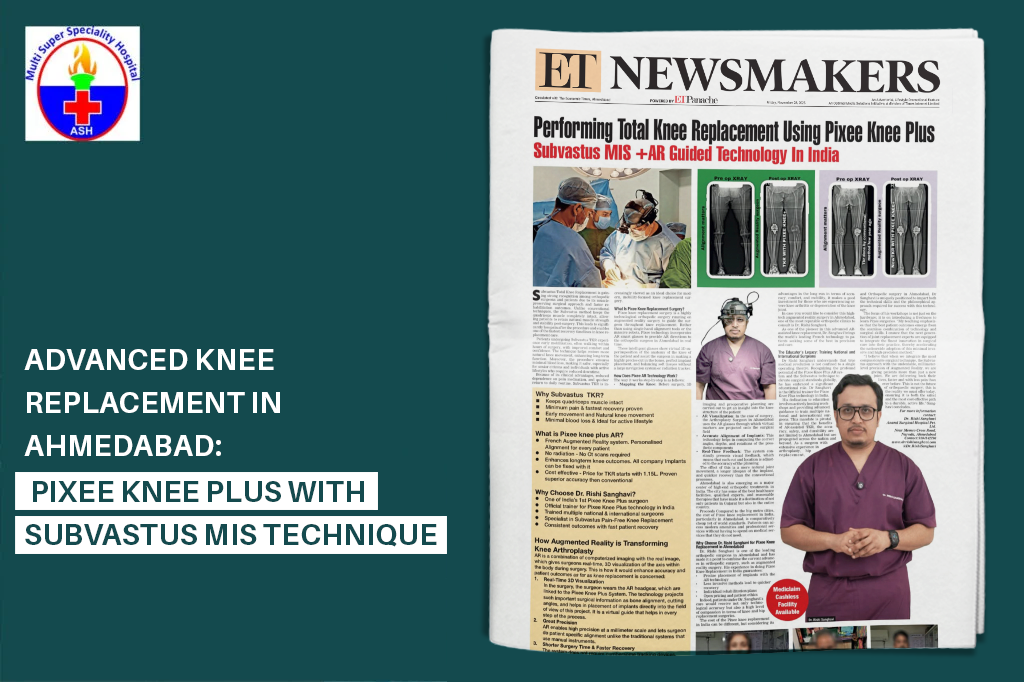
Advanced Knee Replacement in Ahmedabad: Pixee Knee Plus with Subvastus MIS Technique

Advanced Knee Replacement in Ahmedabad: Pixee Knee Plus with Subvastus MIS Technique The pain of a knee can greatly hinder mobility, independence and overall quality of living. For those suffering from severe arthritis or chronic injury to joints, total knee replacement surgery typically is the most effective treatment. Of late, knee replacement surgery in Ahmedabad witnessed a dramatic improvement with the adoption of advanced surgery methods such as the utilization of the Pixee Knee Plus and the Subvastus, also known as the minimally invasive procedure. Advances made by these technologies aim at accuracy, muscle protection, and faster recovery, enabling patients to resume their daily chores with greater ease and confidence. What is The Total Knee Replacement? The total knee replacement procedure is a procedure in which damaged cartilage and the bone of the knee joint is replaced using artificial implants. It is generally recommended for those suffering from: Osteoarthritis that is advanced Rheumatoid arthritis Knee deformities Instant pain that cannot be relieved with therapy or medication Modern knee replacement procedures seek to increase stability, alignment and durability of the implant. Pixee Knee Plus Technology: Enhancing the accuracy of surgery Pixee Knee Plus is an advanced image-free navigation system that aids surgeons in surgical knee reconstruction. It provides real-time feedback on alignment and positioning, thus ensuring balanced and accurate positioning of the implant. Advantages and benefits Pixee Knee Plus Enhanced precision during surgery A better position of the knee joint Reduction of the possibility of implant imbalance Consistent surgical results This technology helps maintain joint health and is being utilized to perform the most advanced knee replacement procedures at Ahmedabad. Subvastus MIS Technique: Muscle-Sparing Knee Replacement Subvastus Subvastus less invasive technique lets surgeons access to the knee joint, without cutting muscles of the thigh. This method is intended to minimize the risk of injury during surgery and facilitate faster rehabilitation. Benefits of Subvastus Advantages of MIS Post-operative pain less Rapider recovery and mobilization Better early knee bend Shorter hospital stay If combined with navigation-assisted surgery this method offers an easy solution for knee replacement. Important to have a Proper Alignment surgical planning Achieving a precise alignment plays a crucial part in the successful completion for knee surgery. The use of advanced planning and intraoperative navigation can help: Equal weight distribution across the joint Smooth knee motion Reduction of stress on implants Evaluation of X-rays before and after surgery can help surgeons determine the outcomes and help ensure that the surgery is performed to their best. The Recovery Experience Following Knee Replacement Patients undergoing technology-assisted knee replacement in Ahmedabad often experience: Early walking, with support Lower dependence on pain medication Stability of joints improved Quicker return to routine tasks The timeframe for recovery varies based on your individual health condition and rehabilitation goals, but modern methods aim at making the procedure easier and more reliable. Who is a candidate for Advanced Knee Replacement? This strategy may be suitable for patients who Have knee arthritis that is very severe. Feel limited mobility because of discomfort Not benefited from the use of conventional treatments Are you medically fit enough for surgery? An experienced orthopedic surgeon examines all patients individually in order to identify the best surgical procedure. What is the reason knee replacement in Ahmedabad is growing rapidly Ahmedabad is now a renowned Orthopedic center because of: The availability of the latest surgical techniques Expert orthopedic surgeons Rehabilitation programs with structure Treatment planning that is patient-centered These factors lead to better results and a growing confidence in knee replacement surgeries. Most Frequently asked questions (FAQs) Is navigation-assisted knee replacement safe? Yes. It improves the accuracy of surgical procedures while allowing full control to remain in the surgeon’s hands. Do knee replacements that are minimally invasive get better faster? In many instances muscles-sparing techniques can aid in faster rehabilitation, and reduce discomfort. How long can a knee replacement last? With the proper alignment and maintenance Implants are able to last 15 to 20 years or more depending on the lifestyle and overall health. Are knee replacements with advanced technology accessible in Ahmedabad? Yes. A number of orthopedic clinics that specialize in Ahmedabad are now offering knee replacement procedures that use navigation. Information Source Mention The specific details reported in this blog post have been derived from a relevant article published in the current news environment. There, Dr. Rishi has described the future of knee replacement with the Pixee Knee Plus procedure and the Subvastus MIS Technique. It has been reported in the article how these advances are helping the field of orthopedic surgery.

Knee Replacement
Knee Replacement

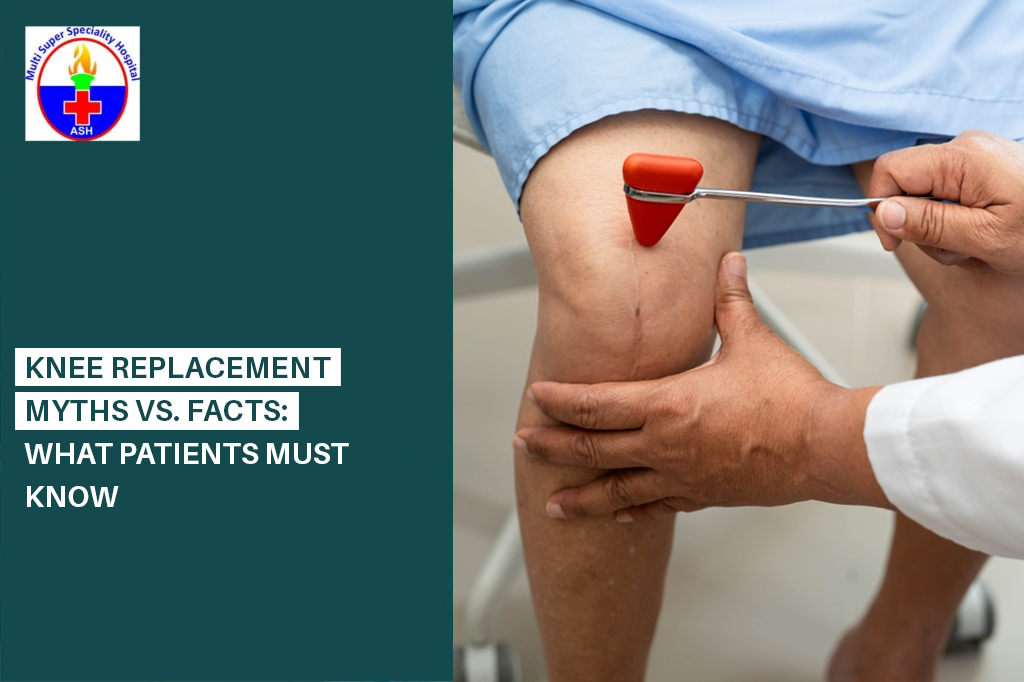
Knee Replacement Myths vs. Facts: What Patients Must Know

Knee Replacement Myths vs. Facts: What Patients Must Know Knee pain can slowly deprive you of your comfort, movement and self-confidence. However, there are so many individuals who live with a knee replacement without seeking treatment since they read horrific tales of the surgery. Half-truths that generate unjustified fear are commonly spread by friends, relatives, or postings on the internet. The fact is that knee replacement surgeries have become much better than before. The patients have been transformed with better technology, more advanced implants and better management of pain. It is only good sense to first de-mystify some of the myths surrounding the fact before concluding whether to get a knee replacement in Ahmedabad or not. What Is Knee Replacement Surgery? What are the indications of knee replacement? Surgery to replace the knee is normally advised in cases where the knee pain is so severe that it begins to impact the daily routine of a person by causing difficulty in walking, climbing up a stair or sleeping. Some Common Myths Myth 1: Only very old people are taken through knee replacement. Fact: Age is not the sole variable that ought to dictate the need to undergo a surgery. Many people who are in their 50s and 60s undergo knee replacement surgery because of the pain that interferes with their quality of life. It lies in the destruction of the joints and the pain that they cause on a daily basis that is not related to aging. Myth 2: There is no way that you can walk after the surgery. Facts: In the majority of patients, ambulation can be made in a day or two after surgery. One needs time to adjust to the proper physiotherapy when walking. Surgery is also said to improve movement and not restrict it. Myth 3: Knee replacement surgery is very painful. Fact: The modern anesthesia and pain management techniques have made anesthesia and pain management techniques much more comfortable than before. The pain is also managed carefully in order to make the patients move early and recover. Myth 4: Implants in the knee are not durable. Fact: Implants that are used now can be utilized for a very long duration. The life of the implants is made easy through proper surgery and proper positioning and post-surgery recommendations. Myth 5: Surgery is the only and original remedy. Fact: Surgery is made the last resort. Physicians investigate non-operative therapy. Knee replacement is recommended in cases when other measures are not able to help. Understanding Knee Replacement Surgery Cost What affects the cost? The knee replacement surgery cost is determined by the nature of the implant used, hospital facilities, the surgical technology, and treatment after surgery. The conditions of each patient are not the same. Thus, the costs may differ. Why cost should not be the only factor Although cost is an issue, selecting an appropriate surgeon, technique and safe hospital care is much more significant to the long-term outcome and comfort. Advanced Techniques in Knee Replacement What is Pixee Knee Replacement? Pixee Knee Replacement is a more modern image-guided removal that assists the doctors in the placing of the knee implants with more precision. It involves the high-tech imaging technique to find a guide in the course of surgery. How does technology help patients? Increased accuracy will enhance coordination, pain, and activity. It can also help to recover easily and achieve better long-term outcomes. Choosing the Right Orthopedic Surgeon Matters What should patients look for? The choice of an orthopedic surgeon in Ahmedabad is very critical. The patients should seek effective communication, individual evaluation and a surgeon who explains everything in a relaxed manner. Why expert guidance reduces fear In most cases, patients lose their myths after learning the procedure. A correct surgeon will be able to explain advantages, dangers and recovery in an honest manner. Facts Help You Make Confident Decisions Never has knee replacement surgery been as safe, precise or patient-friendly as it has become present. The myths must never make you refuse to find a cure for your long-term knee pain. The knowledge of the facts is going to enable you to make decisions related to your health. In case you are planning to have knee replacement in Ahmedabad, a specialist with experience like Dr. Rishi Sanghvai would assist you to receive proper advice, frank answers, and individual treatment, such that you could proceed and do everything with ease and comfort.

Hip Arthritis
Hip Replacement

Early Symptoms of Hip Arthritis & Prevention Tips

Early Symptoms of Hip Arthritis & Prevention Tips As per Dr. Rishi: Arthritis of the hip is on the rise not only amongst the elderly but also in individuals with active lifestyles, sedentary employment, or a history of past injuries. There are many people that ignore the early symptoms and think that it is old age or that they are exhausted. However, hip arthritis is progressive, and the early symptoms can be identified to prevent the loss of mobility in the long term and prevent extreme destruction of joints. Also, it can prevent them from having surgery. This blog will make you learn the first red flags and when you should talk to the best orthopedic doctor in Ahmedabad so that he can guide you. Early Symptoms of Hip Arthritis The following are ten main symptoms that can tell you that your hip joint is experiencing arthritic developments. These symptoms tend to begin lightly and gradually grow with the course of time. 1. Pain in the Front Hip (Most Important) Hip arthritis is known to cause pain in the groin region, before the hip, and sometimes on the thigh. This pain appears to many individuals as they walk, climb up the stairs, or even stand for long durations of time. It can either be painful on movement or numb and sore all day. 2. Morning Stiffness That Improves Slowly Having a stiff hip, especially when you rise in the morning or after sitting down in one position, may be an initial indicator. The stiffness normally disappears after activity and this is normal with inflammation of arthritis. 3. Swelling or Inflammation That Keeps Returning The presence of repeated swelling, warmth around the hip, or the sense of fullness in the joint area can indicate the existence of cartilage damage. In case of swelling after rest, ice, or drugs, arthritis is perhaps already on its way. 4. Grinding or Popping Sounds in the Hip The loss of cartilage can be indicated by hearing or sensing the clicking, grinding, or popping of your hip during movement. Such sensations are induced as ragged surfaces of the joints begin to rub against one another. Once this sound is a common or painful one, then one needs to be examined by an orthopedic surgeon in Ahmedabad to determine what is occurring within the joint. 5. Knee Deformity or Visible Misalignment In some cases, hip arthritis may influence the standing or walking patterns of the individual. You might look a little bow-legged or might have an unequal posture. Misalignment causes an additional burden on the hip joint and accelerates arthritis. 6. Pain Interrupts Sleep A soreness that keeps you awake or can hardly permit you to sleep on your side is a warning sign. The night-time pain in hip arthritis is deep and painful and may be increased by the fact that pressure is put on the joint. 7. Reduced Quality of Life Even such basic operations as getting out of a chair, walking, or getting into a car can become complicated. Most individuals exercise less with the idea of not knowing that they are producing weaker joints and accelerating the rate of arthritis. 8. Dependence on Medication Without Relief When you are gradually increasing the frequency of painkiller medication and it is less effective than before, then it can be assumed that less conservative options are not effective anymore. This is usually the phase when individuals begin to find out long-term remedies as it is at this stage when they will think of having hip replacement surgery in Ahmedabad when they have hip problems. Prevention Tips for Hip Arthritis Although arthritis is not always preventable, it is possible to slow down its development and preserve the health of joints in the early stages. Maintain a Healthy Weight The extra weight exerts extra strain on hip joints and accelerates the loss of cartilage. Stay Active with Low-Impact Exercises Swimming, biking, and yoga are done to strengthen the muscles without straining the hip. Enhance Posture and Body Mechanisms Keep straight but do not stoop; also employ the correct lifting methods to minimize the stress on the joints. Medications in case of AVN when diagnosed in early stage. Routine Checkups Early screening is noteworthy, in case the pain in your hip extends to your knee or back. Knee and hip both have the same nerve which carries pain sensation & it sometimes becomes confusing.  Conclusion The onset of hip arthritis is gradual, and the symptoms early enough will lead you to get the correct treatment at the appropriate time. Hip pains do not always necessitate surgery, yet you still can preserve the health of the joints and be mobile when you notice any changes early. Symptom awareness presents the ability to be informed about what may happen to you and when you need to think about such things as hip replacement in Ahmedabad.

Orthopedic Treatments in India
Orthopedic

Affordable Orthopedic Treatments in India: What Patients Should Know

Affordable Orthopedic Treatments in India: What Patients Should Know Pain in the joints creepily occupies your everyday life. It begins minor perhaps with some aching as you use the stairs or in the morning when you wake up, it starts to restrict your movements, your job and even your sleep. To most individuals, knee and hip issues are not merely about pain; they touch on the senses of independence, self-confidence, and the quality of life in general. The major worry of the majority of patients is not the pain but the treatment cost. That is why the number of people today who seek orthopedic care in India as a potentially reliable and affordable source of care is on the increase. Cities such as Ahmedabad have established reputed centers to do joint treatments with trained professionals and advanced hospitals and have transparent prices. It may be a visit to an orthopedic doctor in Ahmedabad or a visit to an orthopedic surgeon who is doing sophisticated surgeries like knee or hip replacement, patients now can find high-quality care with no financial burden that comes along with orthopedic surgery. Why Anand Surgical Hospital Is Known for Orthopedic Care Procedures that can be extremely expensive in the West can be performed by Dr. Rishi Sanghavi at a fraction of the cost without any loss of safety or results. This is made affordable by several factors: Reduced hospital facilities and operation costs. Well-trained surgeons with modern skills. Availability of implants that are internationally approved. Reduced waiting rates and effective treatment channels. Such cities as Ahmedabad have turned out to be major orthopedic centers, providing highly qualified care at low cost rates to the domestic and foreign patients. At Anand Surgical Hospital Pvt. Ltd., we use the PIXEE knee plus AR system for knee replacement surgery. At the other hospital, under the name of robot, heavy pressure is put on the patients. As in the name of Robotic Surgery PIXEE knee+ is the open system where DR. Rishi Sanghavi can do the knee replacement from 1.15 Lakh to 2.3 Lakh. Understanding Orthopedic Treatments Orthopedic care is indicated for those conditions of bones, joints, muscles, ligaments, and tendons. Arthritis, fractures, joint degeneration, sports injuries and mobility disorders are some of the most prevalent problems that are treated. Timely orthopedic treatment is important in the prevention of complications in the long term. Early diagnosis and treatment can: Reduce chronic pain. Recovery ambulation and self-care. Reduce or eliminate the necessity of major surgery. That is why it can be said that a timely visit to Dr. Rishi Sanghavi, the qualified orthopedic doctor in Ahmedabad can greatly improve recovery and quality of life. Knee Replacement Surgery at Anand Surgical Hospital Pvt. Ltd.: A Cost-Effective Solution The knee replacement surgery cost is another major factor that makes patients prefer India over another country. The total cost varies based on a number of factors and they include: Type of knee implant used, like Indian or imported and cobalt chromium or titanium. Technology and facilities in the hospitals, such as AR and Robotic. Dr. Rishi Sanghavi has 10 years of experience. Physiotherapy and post-surgery rehabilitation. The knee replacement cost in India is quite cheap compared to other countries and the outcome also is affordable. In America or Europe ONE knee replacement cost goes upto 20 to 30,000 USD. Where at Anand Surgical Hospital Pvt. Ltd., the cost ranges from 1200 to 2600 USD. Why Choose Anand Surgical Hospital Pvt. Ltd. for Knee Replacement? The best knee replacement surgeons in Ahmedabad are patient-oriented. The city offers: High-level surgical skills. Modern surgical techniques like Augmented Reality systems. Patient-specific plans. Reduced treatment and recovery expenses. Cost-effective at all levels. Hip Replacement in Ahmedabad: Regaining Mobility with Confidence Things like hip arthritis, fractures and joint degeneration could be of immense impact to the normal way of life, walking, sitting or even sleeping well. Hip replacement surgery is a guarantee in extreme instances. When Is Hip Replacement Recommended? Surgery replacement of the hip can be recommended in case: When daily routine activities are affected. Suffering still exists with medication and treatment. Locomotion is inhibited. The damage is observed jointly on scans like X-rays or MRI. Benefits of Hip Replacement in Anand Surgical Hospital Pvt. Ltd. with Dr. Rishi Sanghavi The options of hip replacement in Ahmedabad have a number of benefits: Patient’s hip work from day 1 of surgery. High output in functions from day 1. Patients can do all activities within one month. High-quality implants that last 25 years or more. Choosing the Right Orthopedic Doctor in Ahmedabad Choosing the appropriate specialist is among the most significant procedures in orthopedic treatment. An experienced surgeon guarantees proper diagnosis, proper planning of treatment and the longevity of the joints. What to Look for in an Orthopedic Specialist A lot of experience with joint replacement surgeries. Employment of superior and least invasive methods. Easy access to information regarding treatment alternatives and expenses. Effective after-surgery rehabilitation. It is always advisable to consult a reputed orthopedic surgeon in Ahmedabad to help the patients know whether surgery is required or non-surgical intervention methods are also effective. What Makes Orthopedic Treatments at Anand Surgical Hospital Pvt. Ltd. Affordable Some factors which make orthopedic treatments affordable: Prices range from 1.3 lakh to 2.5 lakh. Patient-specific treatment plans. Under Mediclaim cashless facilities are also available Economical administration of hospitals that helps to minimize needless costs. Conclusion Indian orthopedic treatment is affordable and this proves that quality healthcare is not necessarily costly. The patients will be able to have quality care at a reasonable cost with the availability of Dr. Rishi Sanghavi, new facilities and clear pricing. With the help of early treatment, professional advice, and educated judgment, you will be able to walk better, live pain-free, and feel confident in your daily life.