Knee Replacement

Knee Replacement Surgeons in Ahmedabad
Knee Replacement

Top 13 Knee Replacement Surgeons in Ahmedabad – Trusted Experts for Pain-Free Movement

Top 13 Knee Replacement Surgeons in Ahmedabad – Trusted Experts for Pain-Free Movement Whether you’re exploring total knee replacement, revision surgery, or robotic joint care, Ahmedabad is home to some of India’s most skilled orthopedic surgeons. Knee joint problems can significantly affect mobility and quality of life — choosing the right surgeon and care team can make all the difference in your recovery. Here’s our carefully researched list of the Top 13 Knee Replacement Surgeons in Ahmedabad. 1. Dr Rishi Sanghavi – Pioneering Knee Replacement Specialist Dr. Rishi Sanghavi is widely recognized for combining technology with surgical expertise for knee replacements in Ahmedabad. He is noted as the first surgeon in India to use the Pixee Knee+ augmented reality system for knee replacements, enhancing precision and implant alignment in total knee replacements. He has performed thousands of successful orthopedic surgeries and specializes in advanced techniques such as AR-guided knee surgery and muscle-sparing approaches for faster recovery. Dr Rishi does all knee replacement surgery by specialised subvastus approach where the knee is replaced without cutting quadriceps muscles. And leading to faster recovery of patients. 2. Dr. Rachit Sheth Dr. Rachit Sheth is a knee replacement surgeon practicing at Synergy Hospital in Jagatpur, Gota, Ahmedabad. He provides knee and hip joint replacement surgeries and treats orthopedic trauma cases. 3. Dr. Saurabh Goyal Dr. Saurabh Goyal offers knee replacement and joint replacement services at Epic Hospital, located behind Rajpath Club, off Sarkhej–Gandhinagar Highway, Bodakdev, Ahmedabad. 4. Dr. Saurin Shah Dr. Saurin Shah performs robotic and conventional knee replacement surgeries. He provides orthopedic and joint replacement services in Ahmedabad. 5. Dr. Tejas Gandhi Dr. Tejas Gandhi is an orthopedic surgeon based in Ambawadi, Ahmedabad. He provides knee replacement, hip replacement, and other joint-related surgical treatments. 6. Dr. Ateet Sharma Dr. Ateet Sharma offers hip and knee replacement surgeries, including robotic-assisted procedures. He practices in Shyamal Cross Rd, opposite Dhananjay Towers, Ahmedabad and treats joint-related conditions. 7. Dr. Pranav A Shah Dr. Pranav A Shah provides knee replacement surgery, fracture treatment, and joint reconstruction services. He practices at CIMS Hospital, off Science City Road, Panchamrut Bungalows, Sola in Ahmedabad. 8. Dr. Priyank Gupta Dr. Priyank Gupta practices at HCG Hospital, Ellisbridge in Ahmedabad. He performs knee replacement surgery and treats sports injuries and joint conditions. 9. Dr. Krunal Soni Dr. Krunal Soni provides knee replacement, joint surgery, and arthroscopic procedures in Sushil Nagar Society, Memnagar, Ahmedabad. 10. Dr. Urang Patel Dr. Urang Patel is an orthopedic surgeon in Satellite, Ahmedabad. He offers knee replacement surgery and treatment for bone and joint conditions. 11. Dr. Vijal Modi Dr. Vijal Modi practices at DVM Hospital, Ambawadi in Ahmedabad and provides joint replacement surgery, fracture treatment, and orthopedic care. 12. Dr. Dhiraj Marothi Dr. Dhiraj Marothi practices at Race Knee Clinic in Ambawadi, Ahmedabad. He provides knee replacement and joint-related treatments. 13. Assure Orthopaedic Hospital Assure Orthopaedic Hospital is located in Bodakdev, Ahmedabad. The hospital provides knee replacement surgery and other orthopedic treatments. How to Choose the Right Knee Replacement Surgeon  Choosing the right orthopedic surgeon is crucial for successful knee replacement outcomes. Here are a few essential tips:  Credentials & Experience  Look for specialized training in arthroplasty (joint replacement) and years of experience performing knee surgeries.  Technology & Techniques  Surgeons using robotic assistance, navigation technology (like AR systems), or minimally invasive approaches often achieve better precision and recovery results.  Patient Reviews & Outcomes  Positive patient testimonials, before/after recovery success stories, and transparent complication rates reflect trustworthiness. Personalized Care  Surgeons who tailor treatment plans based on age, lifestyle, and activity goals tend to deliver more satisfying long-term results.  Final Thoughts  Ahmedabad boasts a strong pool of expert knee replacement surgeons — from technology leaders like Dr. Rishi Sanghavi to veterans like Dr. Saurabh Goyal and Dr. Saurin Shah. Whichever specialist you choose, ensure they align with your specific needs and recovery goals. Ready to take the next step toward a pain-free life? Consider booking consultations with these experts to discover the best care plan for you.  Frequently Asked Questions (FAQs)  1. How long does it take to recover from knee replacement?  Most patients start walking within 1–3 days after surgery with support. Full recovery usually takes 6–12 weeks, depending on age, health condition, and physiotherapy.  2. How much does knee replacement surgery cost in Ahmedabad?  The cost of knee replacement in Ahmedabad generally ranges between ₹1.5 lakh to ₹3.5 lakh per knee, depending on the hospital, implant type, and surgical technique used.  3. Who needs knee replacement surgery?  People with severe knee arthritis, constant pain, stiffness, or difficulty walking that does not improve with medicines or therapy may need knee replacement surgery.
Single Knee vs. Both Knee Replacement
Knee Replacement

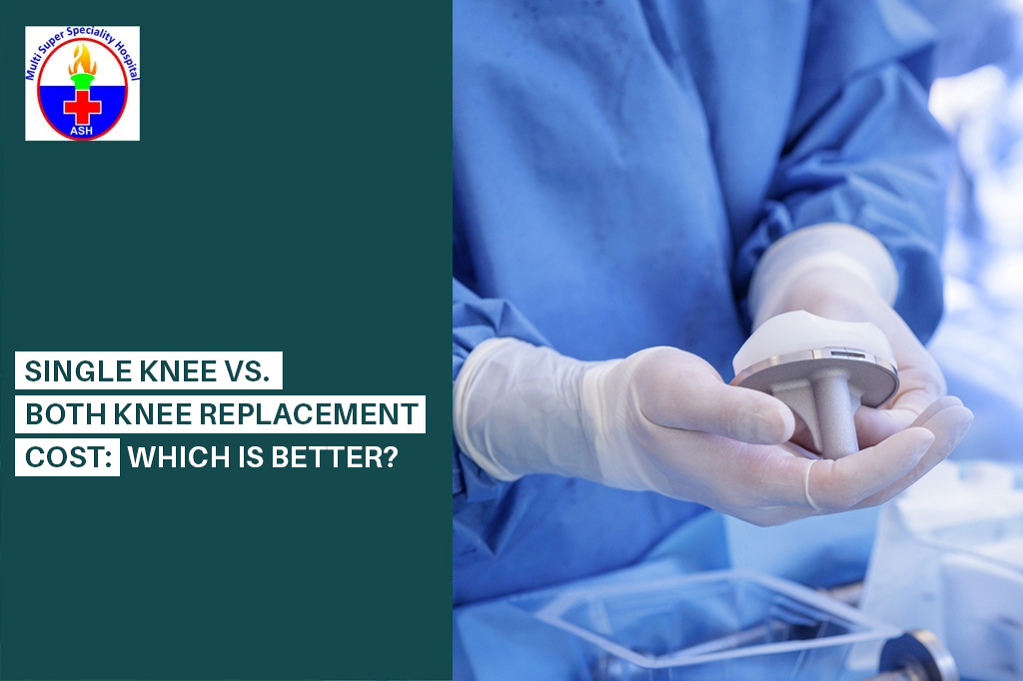
Single Knee vs. Both Knee Replacement Cost: Which Is Better?

Single Knee vs. Both Knee Replacement Cost: Which Is Better? Suppose you wake up, and what you experience is not the floor beneath your feet, but some localized sharp pain in your joints. This is not a bad morning to millions of people, but their daily life. Chronic knee pain is not only painful, but it makes your life miserable. It causes you to skip the morning walk, the stairs and eventually lose the precious moments of life. After conservative treatment such as physiotherapy or injections have failed, then you are at a crossroads of big proportions, that is, knee replacement surgery. This is where the actual dilemma begins. When you are so tired of one of your knees, do you replace one first or both at the same time? Is Double Knee Replacement really two times pricier or does it provide a hidden bargain? It is easy to get lost in these medical and financial waters. This is the reason why we have compiled this detailed guide. We will raise the veil on costs, recovery, and clinical outcomes with the help of Dr. Rishi Sanghavi, an MS (Ortho) Gold Medalist and a veteran of over 7,000 orthopedic surgeries. Defining the Options: Unilateral vs. Bilateral We must first know what it is before we discuss the “how much” of it. Two major routes of patients with dual-knee arthritis exist in the field of orthopedics: 1. Unilateral Knee Replacement (Single) This is the normal practice whereby a surgeon will only replace one damaged knee joint. This is normally advised where the pain on one side is much more severe or you are already known to have some underlying health conditions (such as heart or lung problems) that make it safer to have a shorter surgery. 2. Bilateral Knee Replacement (Both) This is a knee replacement on both knees. This can be done in two ways: In the case of the majority of patients who are going to seek efficiency and spending reduction, bilateral surgery on the same day is the game-changer. The Global Cost Gap: Why the World Is Looking at India In terms of cost, the figures are usually shocking. A typical knee replacement costs as much as a luxury car in the Western health care system. Why is it so much more affordable here? It does not concern less expensive materials. Actually, Dr. Sanghavi takes the same world-class, FDA-approved implants (like the ones from Zimmer Biomet or Stryker) that are utilized in the most reputable hospitals in both New York and London. The difference in the prices is based on the reduced administrative overheads, reduced cost of living of the medical personnel and simplified surgical procedure with a focus on high-volume excellence. Detailed Cost Comparison: Single vs. Both Assuming that you are a candidate for bilateral surgery, the economically soundest decision is to have both knees done simultaneously. Here is why: 1. The Anesthesia & OT Factor When you step into an Operating Theater (OT) every time, all these are fixed costs, namely the sterilization, time of the surgical team, and anesthesia drugs. The setup costs are only incurred once by doing both knees simultaneously. 2. Hospital Stay and Room Charges One knee replacement normally takes a 3-4 day stay. The duration of a stay could be increased by only one or two days with a double knee replacement. In case you do them independently (staged), you have to pay two different admissions, two different room fees and two different administrative fees. 3. Pre-Op and Post-Op Savings Before every surgery, there should be a set of tests: blood tests, ECG, X-rays, and physician clearance. Having both knees simultaneously implies that you only perform (and pay for) a single round of preoperative screening. 4. The Physiotherapy Advantage This needs professional physiotherapy to recover. Although there is more rehab involved during two knee rehabilitations, it is centered in one period. You do not need to spend on the second round of home-visit physio sessions six months later. Is Both-Knee Replacement Right for You? All are not candidates for simultaneous bilateral surgery. Dr. Sanghavi analyzes patients according to: Investing in Your Future Single or double knee replacement is an economic compromise of health. Although the amount of money and time spent in performing the two knees simultaneously is more expensive initially, the savings in terms of money, time and physical therapy in the long run makes it the better option for those individuals who are medically fit to undergo it. After all, it is not a surgery you are paying for. You are purchasing the right to walk your daughter to the altar, to travel globally, or to just take a stroll in the park without any pain. In Anand Surgical Hospital Pvt. Ltd., we integrate global experience with a clear-cut and reasonable cost system. Ready to move without pain? Allow no year to pass by with stiff joints. Talk with Dr. Rishi Sanghavi to find out what procedure fits your body and budget.  

Knee Replacement Surgery
Knee Replacement

Age Limit for Knee Replacement Surgery – Is There a Right Age?

Age Limit for Knee Replacement Surgery – Is There a Right Age? Knee pain is one of the most common musculoskeletal complaints affecting people in Ahmedabad and across India. For many, it starts as occasional discomfort when walking, climbing stairs, or standing for long periods. Over time, it can progress to persistent pain that affects daily life, sleep, and even mental well-being. When conservative treatments fail and pain becomes debilitating, knee replacement surgery often enters the conversation. But a question that frequently arises — from patients, families, and caregivers alike — is: “Is there a right age for knee replacement surgery?” Is it just something older adults do, or can younger people consider it too? And at what point does age become a limiting factor rather than a benefit? In this comprehensive guide, we will explore knee replacement surgery thoroughly, focusing on age considerations, clinical evidence, risks and benefits, real-world examples, and the factors that influence surgical decisions. Our goal is to inform, clarify misconceptions, and empower readers with clear answers rooted in research and practical experience — especially for people in Ahmedabad considering this important decision. Understanding Knee Replacement Surgery Knee replacement — also called knee arthroplasty — is a surgical procedure in which damaged parts of the knee joint are removed and replaced with artificial components made from metal and high-grade plastic. The goal is to relieve pain, restore function, and improve quality of life. Over the past few decades, knee replacement has become one of the most successful and commonly performed orthopedic surgeries globally, including in India. Advances in surgical techniques, prosthetic materials, and rehabilitation protocols have made it safer and more effective than ever. Traditionally associated with older adults, knee replacement is increasingly considered for younger individuals under certain circumstances — raising important questions about age, lifestyle, and long-term outcomes. Is There a “Right” Age for Knee Replacement? The short answer is: There is no universally fixed “right” age for knee replacement surgery. Rather, the decision depends on individual health, severity of symptoms, daily functional impact, and personal goals. Historically, knee replacements were performed mostly in people aged 60 and above. However, recent trends show that the procedure is being offered to patients in their 50s and even late 40s, depending on circumstances. But what drives the difference? Let’s explore. Why Age Alone Shouldn’t Determine Eligibility Age is just one factor among many that doctors consider. More important than calendrical age is biological age — a reflection of overall health, activity level, weight, bone quality, and joint condition. Many younger patients with severe osteoarthritis (the most common indication for knee replacement) may experience pain and disability that significantly impairs daily life. For these individuals, knee replacement can be life-changing. Conversely, some older adults may maintain an active lifestyle with mild symptoms and excellent function. For them, non-surgical treatments may be preferable initially. So rather than a strict age threshold, surgeons focus on a holistic assessment of the individual’s overall health and needs. How Age Affects Knee Replacement Outcomes Although age itself is not a strict cutoff, it does influence certain aspects of knee replacement surgery and recovery. Younger patients (40s–50s): Older patients (70s and above): Neither group is inherently “too young” or “too old.” Instead, the suitability of surgery is determined by how much pain and dysfunction the knee causes, and whether the individual’s health profile supports surgery and recovery. When Is Knee Replacement Recommended? Knee replacement surgery is most commonly recommended for people who: Importantly, symptom severity and impact on quality of life matter more than age alone. For example, two patients might both be 55 years old. One may have mild discomfort managed with therapy, while the other experiences debilitating pain that prevents work or basic activities. The latter is a more suitable candidate for knee replacement regardless of age. Common Causes of Severe Knee Pain Several conditions may lead to the need for knee replacement surgery: The severity and progression of these conditions vary by person — and not directly by age alone. Benefits of Knee Replacement Surgery Knee replacement surgery — when appropriately indicated — offers several life-enhancing benefits: 1. Significant Pain Relief The most immediate and meaningful benefit for many patients is relief from pain that no longer responds to medication or therapy. 2. Improved Mobility and Function Patients frequently report improved ease of walking, climbing stairs, and engaging in daily activities that were previously painful or avoided. 3. Better Sleep and Emotional Well-being Chronic knee pain can affect sleep quality and overall mood. Relief often leads to better rest and enhanced emotional health. 4. Reduced Dependency on Pain Medications Many people depend on analgesics or anti-inflammatory drugs for years. Successful knee replacement reduces this dependence, lowering side effect risks. 5. Enhanced Quality of Life With reduced pain and improved mobility, patients often return to hobbies, social activities, and travel that had been limited by knee issues. Challenges and Considerations While knee replacement offers significant benefits, it is not without challenges — and some are related to age. Higher Expectations in Younger Patients Younger individuals often expect to return to high-impact sports or activities like running. Traditional knee replacements are designed to restore pain-free walking and daily function, but high-impact activity may shorten implant life. Surgeons work with patients to set realistic expectations while encouraging safe, low-impact activities like swimming, cycling, or walking. Longevity of Implants Modern knee replacements can last 15–20 years or more, but a younger patient (e.g., in their 40s) is likely to live long enough to require a revision later in life. This is a consideration, not a contraindication, but it underscores the importance of long-term planning. Revision surgeries are more complex than primary knee replacements, so discussions about future needs are part of the decision-making process. Age-Related Health Factors Older adults may have other health conditions that influence recovery — such as diabetes, heart disease, or decreased bone density. A comprehensive pre-operative evaluation helps determine readiness and minimize risk. Real-World Examples Understanding how age factors

Knee Replacement
Knee Replacement

Symptoms That Indicate the Need for Knee Replacement

Symptoms That Indicate the Need for Knee Replacement The pain in the knee is also often considered an aging fact or a transient issue due to overuse. A significant number of individuals live with pain over the years and adapt to it by changing their lifestyle rather than treating the cause of the pain. Nevertheless, the presence of constant knee issues cannot be disregarded. In most instances, escalating symptoms are good indications that the knee joint is in a bad condition and can require an operation. As more patients seek the most suitable knee replacement in Ahmedabad, it has become necessary to know when knee pain is beyond mere treatment and when knee replacement is necessary. What Is Knee Replacement Surgery? Knee replacement surgery is the surgery where damaged surfaces of the knee joint are substituted with artificial components that are made of metal and plastic of medical grade. These implants alleviate pain and ensure the normal movement of the joints. Who Typically Needs Knee Replacement? It is necessary to mention that knee replacement is typically indicated in the case when non-surgical treatment options fail to help in alleviating pain. Early Warning Signs of Knee Joint Damage Early identification of symptoms will stop both unwarranted misery and degeneration of joints. Persistent Knee Pain One of the earliest warning signs occurs when pain persists even after some rest or medication on a monthly basis. When knee pain recurs soon after the treatment, there is a possibility of progressive cartilage damage. Pain During Daily Activities Having problems with routine activities like Such problems indicate that the knee is no longer working normally. Swelling and Stiffness Stiffness in the morning taking more than 30 minutes together with swelling following little exercise is usually an indication of inflammatory or degenerative joint disease. At this point, it would be highly recommended to see an orthopedic doctor in Naroda or an expert in that field. Advanced Symptoms That Strongly Indicate Knee Replacement The symptoms become increasingly difficult to treat and more pronounced as the knee damage develops. Severe Pain Even at Rest Constant pain during sitting, rest and sleep means that the joints are highly degenerated. Knee pain during the night is the complaint that leads to disturbed sleep in many patients. Loss of Knee Function The symptoms indicate internal joint damage. Visible Deformity of the Knee Alterations in the knee shape which can include bow legs or knock-knees are common in severe arthritis. Posture and walking also have this deformity. Dependence on Painkillers Taking pain medication daily or frequent injections that do not result in much pain are good indicators that conservative treatment is not effective anymore. When Non-Surgical Treatments Stop Working The majority of knee issues are first treated medically. Common Conservative Treatments Signs These Treatments Have Failed Temporary relief or rapid recurrence of pain is normally an indication of severe underlying joint damage. Maintaining unsuccessful treatments may increase the breakdown of joints and complicate healing in the future. How Knee Arthritis Progresses Over Time The arthritis of the knee tends to develop over time. Stages of Knee Arthritis How Modern Knee Replacement Has Improved Recovery The technological change has revolutionized the results of knee replacement. From Traditional Surgery to Precision Techniques The old systems made extensive use of manual alignment. The newer methods have adopted the aid of computers and augmented reality to be more precise. Pixee Knee+ Technology The Pixee Knee+ system is an augmented reality system that helps surgeons to navigate the procedure and enhances the positioning and alignment of implants. Impact on Recovery Patients often experience: With the proper alignment, there is less wear upon the implants and long-term success is facilitated. Understanding the Cost and Value of Knee Replacement Affordability is one of the most widespread issues for patients. What Influences the Cost? The cost of Knee replacement in Ahmedabad may vary considerably.  In developed countries like America or Europe ONE knee replacement costs up to 20 to 30,000 USD. At Anand Surgical Hospital Pvt. Ltd., (India) the cost ranges from 1200 to 2600 USD. When Should You Consult an Orthopedic Surgeon? You are to consult specialists in case: When consultation is done early, it can be better evaluated, and treatment can be planned. Conclusion Knee pain, stiffness, deformity and loss of functionality are not aging alone symptoms but are also signs that your knee joint is approaching the end of its natural life. Early diagnosis of these symptoms is possible, which gives the chance to be cured and improve the results. As a patient seeking the most effective knee replacement in Ahmedabad, Dr. Rishi Sanghavi, MS (Ortho), gold medalist at Anand Surgical Hospital Pvt. Ltd. is using the latest precision technology and experience with over 7,000 successful knee replacement surgeries. He uses India’s first Pixee Knee+ system to enable the patient to walk and have confidence once again.  

Knee Replacement Surgery
Knee Replacement

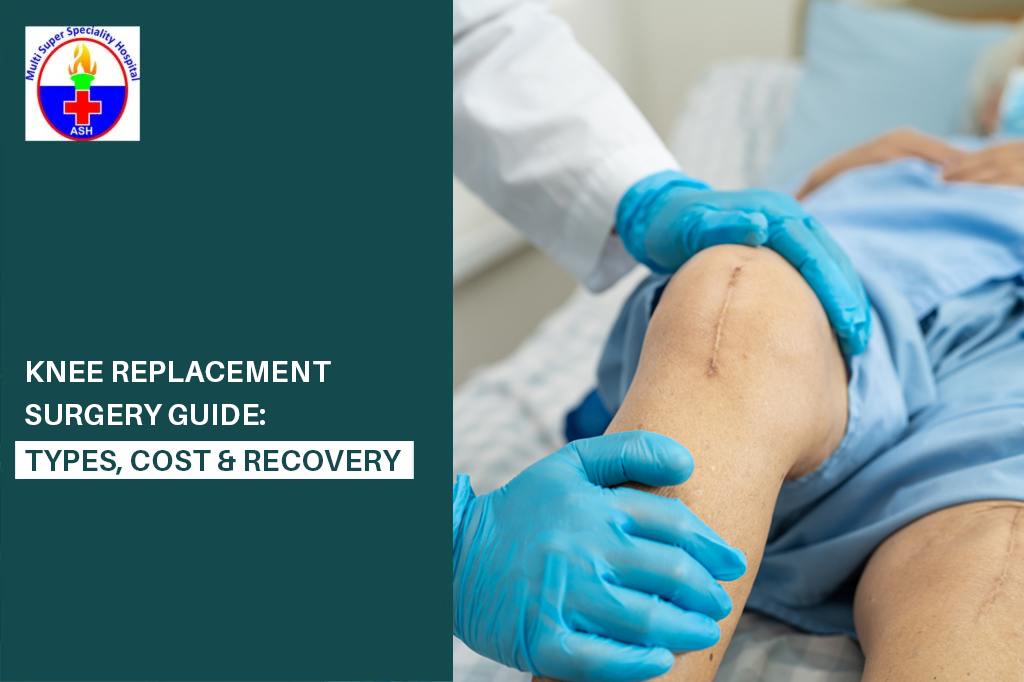
Knee Replacement Surgery Guide: Types, Cost & Recovery

Knee Replacement Surgery Guide: Types, Cost & Recovery Knee pain is one of the most common health problems people face as they grow older. Some people feel pain after walking for a long time. Others feel pain while climbing stairs or even while sleeping. In many cases, simple treatments such as medicines or exercises help. But sometimes the pain becomes too severe and daily life becomes difficult. When medicines don’t work and the pain doesn’t go away, a doctor may suggest knee replacement surgery. Knee replacement surgery can feel scary to think about, especially if you have never heard much about it. Many people have questions like: What types of knee replacement are there? How much does it cost? How long will it take to recover? How will my life change after the surgery? This guide explains everything in clear and simple words so you can understand knee replacement surgery completely and make good decisions. What Is Knee Replacement Surgery? The knee is a major joint in the human body, playing a crucial role by linking the femur to the tibia. A smooth layer of cartilage covers the ends of these bones so that they can move easily without pain. When this cartilage wears out due to age, injury, arthritis, or other reasons, the bones start rubbing against each other. This leads to discomfort, joint stiffness, swelling, and reduced mobility. Knee replacement surgery is a medical procedure in which the damaged parts of the knee joint are removed and replaced with artificial parts made of metal and plastic. The main goal of this surgery is to reduce pain, improve movement, and help you get back to your daily activities. Why Is Knee Replacement Surgery Needed? Knee replacement surgery is not done for simple or occasional knee pain. It is usually recommended when: When the knee stops working well and affects your lifestyle, surgery becomes the best option for long-term relief. Types of Knee Replacement Surgery There are several types of knee replacement surgery. Each type is chosen based on how much of the knee is damaged and what the patient needs. 1. Total Knee Replacement (TKR) Total knee replacement is the most common type. In this surgery, the entire damaged knee joint is replaced with an artificial joint. The end of the thigh bone and the top of the shin bone are shaped to fit the new parts. A plastic piece is placed in between to allow smooth movement. Total knee replacement is usually recommended when the damage is widespread in the knee and pain affects most daily activities. 2. Partial Knee Replacement (PKR) In partial knee replacement, Only the injured section of the knee is surgically replaced. This is done when the damage is limited to one small area of the knee. The rest of the knee remains natural. Because only part of the knee is replaced, recovery may be faster, and the surgery may be shorter. This type is good for people whose damage is not severe or widespread. 3. Revision Knee Replacement Revision knee replacement is done when a previous knee replacement wears out or develops problems. Over time, artificial knee parts can become loose or painful. In such cases, the surgeon removes the old artificial joint and replaces it with a new one. Revision surgery is more complex than primary knee replacement and usually requires experienced surgeons. 4. Complex or Custom Knee Replacement Some patients have unusual knee shapes or very severe damage that requires special surgical planning. In such cases, a custom-designed knee replacement may be made specifically for the patient. This type is less common but helpful for people with unique knee problems. How Is Knee Replacement Surgery Performed? Knee replacement surgery is usually done in a hospital under anesthesia, so you do not feel pain during the operation. Initially, the surgeon creates a surgical cut in the knee area. Next, the surgeon meticulously clears away the injured cartilage and bone. The ends of the bones are shaped to fit the artificial parts. These parts are then fixed in place.The incision is then secured using sutures or surgical clips. The operation usually takes about one to two hours, but it can vary depending on the type of surgery and the patient’s health. Who Is a Good Candidate for Knee Replacement? Not everyone with knee pain needs this surgery. A doctor will recommend surgery when other treatments have failed. Good candidates are people who: Age alone is not a deciding factor. Many people in their 50s, 60s, or even younger can benefit from knee replacement if their knee condition is serious. Preparing for Knee Replacement Surgery Before surgery, the doctor will do several tests such as X-rays, blood tests, and physical exams. These help the surgeon understand the knee’s condition and overall health. Patients may be advised to stop certain medicines a few days before the operation. It is also helpful to start light exercises to strengthen the muscles around the knee. Many surgeons ask patients to lose extra weight to reduce stress on the new knee. It’s also important to prepare your home. Having things like a chair with support, easy shoes, and a clean path to move around can make recovery easier. Cost of Knee Replacement Surgery The cost of knee replacement surgery depends on many factors, including: In many countries, knee replacement surgery includes the cost of the implant, hospital charges, surgeon’s fee, tests, medicines, and rehabilitation. In public or government hospitals, the cost may be lower or subsidized. Treatment expenses tend to be greater in privately owned hospitals. Many health insurance plans also cover part or all of the surgery cost. While cost is important, the decision should also consider the quality of care, surgeon’s experience, and rehabilitation support. Recovery After Knee Replacement Surgery Recovery is one of the most important parts of knee replacement surgery. Most people start moving their knee on the same day or the next day after surgery. Walking with the help of a walker, crutches,

knee-replacement-with-subvastus-mis-technique
Knee Replacement, Pixee Knee

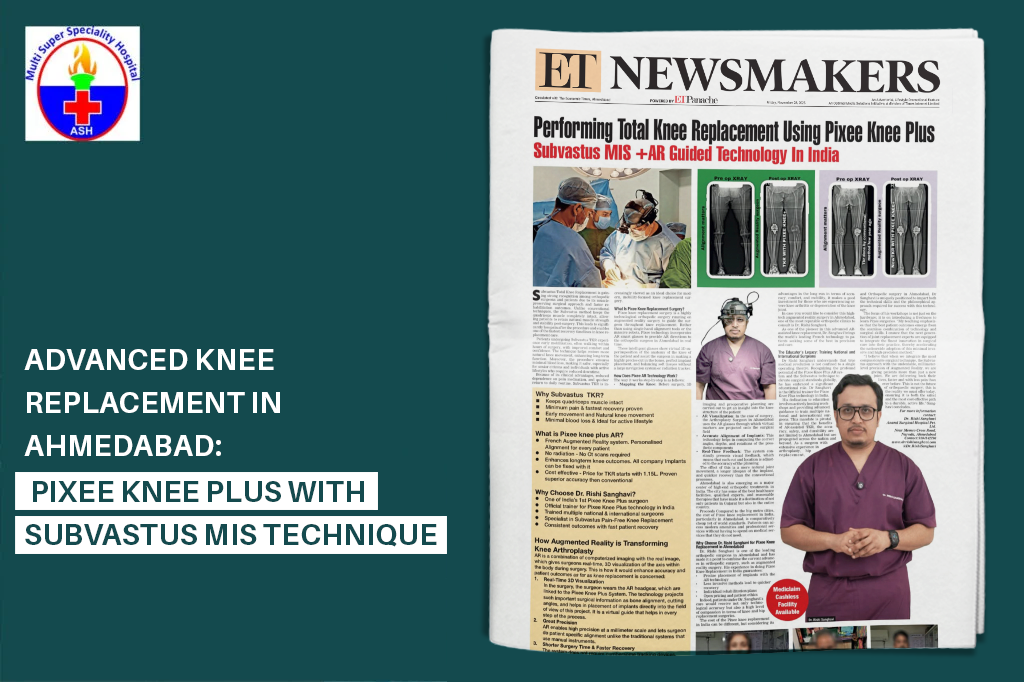
Advanced Knee Replacement in Ahmedabad: Pixee Knee Plus with Subvastus MIS Technique

Advanced Knee Replacement in Ahmedabad: Pixee Knee Plus with Subvastus MIS Technique The pain of a knee can greatly hinder mobility, independence and overall quality of living. For those suffering from severe arthritis or chronic injury to joints, total knee replacement surgery typically is the most effective treatment. Of late, knee replacement surgery in Ahmedabad witnessed a dramatic improvement with the adoption of advanced surgery methods such as the utilization of the Pixee Knee Plus and the Subvastus, also known as the minimally invasive procedure. Advances made by these technologies aim at accuracy, muscle protection, and faster recovery, enabling patients to resume their daily chores with greater ease and confidence. What is The Total Knee Replacement? The total knee replacement procedure is a procedure in which damaged cartilage and the bone of the knee joint is replaced using artificial implants. It is generally recommended for those suffering from: Osteoarthritis that is advanced Rheumatoid arthritis Knee deformities Instant pain that cannot be relieved with therapy or medication Modern knee replacement procedures seek to increase stability, alignment and durability of the implant. Pixee Knee Plus Technology: Enhancing the accuracy of surgery Pixee Knee Plus is an advanced image-free navigation system that aids surgeons in surgical knee reconstruction. It provides real-time feedback on alignment and positioning, thus ensuring balanced and accurate positioning of the implant. Advantages and benefits Pixee Knee Plus Enhanced precision during surgery A better position of the knee joint Reduction of the possibility of implant imbalance Consistent surgical results This technology helps maintain joint health and is being utilized to perform the most advanced knee replacement procedures at Ahmedabad. Subvastus MIS Technique: Muscle-Sparing Knee Replacement Subvastus Subvastus less invasive technique lets surgeons access to the knee joint, without cutting muscles of the thigh. This method is intended to minimize the risk of injury during surgery and facilitate faster rehabilitation. Benefits of Subvastus Advantages of MIS Post-operative pain less Rapider recovery and mobilization Better early knee bend Shorter hospital stay If combined with navigation-assisted surgery this method offers an easy solution for knee replacement. Important to have a Proper Alignment surgical planning Achieving a precise alignment plays a crucial part in the successful completion for knee surgery. The use of advanced planning and intraoperative navigation can help: Equal weight distribution across the joint Smooth knee motion Reduction of stress on implants Evaluation of X-rays before and after surgery can help surgeons determine the outcomes and help ensure that the surgery is performed to their best. The Recovery Experience Following Knee Replacement Patients undergoing technology-assisted knee replacement in Ahmedabad often experience: Early walking, with support Lower dependence on pain medication Stability of joints improved Quicker return to routine tasks The timeframe for recovery varies based on your individual health condition and rehabilitation goals, but modern methods aim at making the procedure easier and more reliable. Who is a candidate for Advanced Knee Replacement? This strategy may be suitable for patients who Have knee arthritis that is very severe. Feel limited mobility because of discomfort Not benefited from the use of conventional treatments Are you medically fit enough for surgery? An experienced orthopedic surgeon examines all patients individually in order to identify the best surgical procedure. What is the reason knee replacement in Ahmedabad is growing rapidly Ahmedabad is now a renowned Orthopedic center because of: The availability of the latest surgical techniques Expert orthopedic surgeons Rehabilitation programs with structure Treatment planning that is patient-centered These factors lead to better results and a growing confidence in knee replacement surgeries. Most Frequently asked questions (FAQs) Is navigation-assisted knee replacement safe? Yes. It improves the accuracy of surgical procedures while allowing full control to remain in the surgeon’s hands. Do knee replacements that are minimally invasive get better faster? In many instances muscles-sparing techniques can aid in faster rehabilitation, and reduce discomfort. How long can a knee replacement last? With the proper alignment and maintenance Implants are able to last 15 to 20 years or more depending on the lifestyle and overall health. Are knee replacements with advanced technology accessible in Ahmedabad? Yes. A number of orthopedic clinics that specialize in Ahmedabad are now offering knee replacement procedures that use navigation. Information Source Mention The specific details reported in this blog post have been derived from a relevant article published in the current news environment. There, Dr. Rishi has described the future of knee replacement with the Pixee Knee Plus procedure and the Subvastus MIS Technique. It has been reported in the article how these advances are helping the field of orthopedic surgery.

Knee Replacement
Knee Replacement

Knee Replacement Myths vs. Facts: What Patients Must Know

Knee Replacement Myths vs. Facts: What Patients Must Know Knee pain can slowly deprive you of your comfort, movement and self-confidence. However, there are so many individuals who live with a knee replacement without seeking treatment since they read horrific tales of the surgery. Half-truths that generate unjustified fear are commonly spread by friends, relatives, or postings on the internet. The fact is that knee replacement surgeries have become much better than before. The patients have been transformed with better technology, more advanced implants and better management of pain. It is only good sense to first de-mystify some of the myths surrounding the fact before concluding whether to get a knee replacement in Ahmedabad or not. What Is Knee Replacement Surgery? What are the indications of knee replacement? Surgery to replace the knee is normally advised in cases where the knee pain is so severe that it begins to impact the daily routine of a person by causing difficulty in walking, climbing up a stair or sleeping. Some Common Myths Myth 1: Only very old people are taken through knee replacement. Fact: Age is not the sole variable that ought to dictate the need to undergo a surgery. Many people who are in their 50s and 60s undergo knee replacement surgery because of the pain that interferes with their quality of life. It lies in the destruction of the joints and the pain that they cause on a daily basis that is not related to aging. Myth 2: There is no way that you can walk after the surgery. Facts: In the majority of patients, ambulation can be made in a day or two after surgery. One needs time to adjust to the proper physiotherapy when walking. Surgery is also said to improve movement and not restrict it. Myth 3: Knee replacement surgery is very painful. Fact: The modern anesthesia and pain management techniques have made anesthesia and pain management techniques much more comfortable than before. The pain is also managed carefully in order to make the patients move early and recover. Myth 4: Implants in the knee are not durable. Fact: Implants that are used now can be utilized for a very long duration. The life of the implants is made easy through proper surgery and proper positioning and post-surgery recommendations. Myth 5: Surgery is the only and original remedy. Fact: Surgery is made the last resort. Physicians investigate non-operative therapy. Knee replacement is recommended in cases when other measures are not able to help. Understanding Knee Replacement Surgery Cost What affects the cost? The knee replacement surgery cost is determined by the nature of the implant used, hospital facilities, the surgical technology, and treatment after surgery. The conditions of each patient are not the same. Thus, the costs may differ. Why cost should not be the only factor Although cost is an issue, selecting an appropriate surgeon, technique and safe hospital care is much more significant to the long-term outcome and comfort. Advanced Techniques in Knee Replacement What is Pixee Knee Replacement? Pixee Knee Replacement is a more modern image-guided removal that assists the doctors in the placing of the knee implants with more precision. It involves the high-tech imaging technique to find a guide in the course of surgery. How does technology help patients? Increased accuracy will enhance coordination, pain, and activity. It can also help to recover easily and achieve better long-term outcomes. Choosing the Right Orthopedic Surgeon Matters What should patients look for? The choice of an orthopedic surgeon in Ahmedabad is very critical. The patients should seek effective communication, individual evaluation and a surgeon who explains everything in a relaxed manner. Why expert guidance reduces fear In most cases, patients lose their myths after learning the procedure. A correct surgeon will be able to explain advantages, dangers and recovery in an honest manner. Facts Help You Make Confident Decisions Never has knee replacement surgery been as safe, precise or patient-friendly as it has become present. The myths must never make you refuse to find a cure for your long-term knee pain. The knowledge of the facts is going to enable you to make decisions related to your health. In case you are planning to have knee replacement in Ahmedabad, a specialist with experience like Dr. Rishi Sanghvai would assist you to receive proper advice, frank answers, and individual treatment, such that you could proceed and do everything with ease and comfort.

Knee Replacement Surgery
Knee Replacement

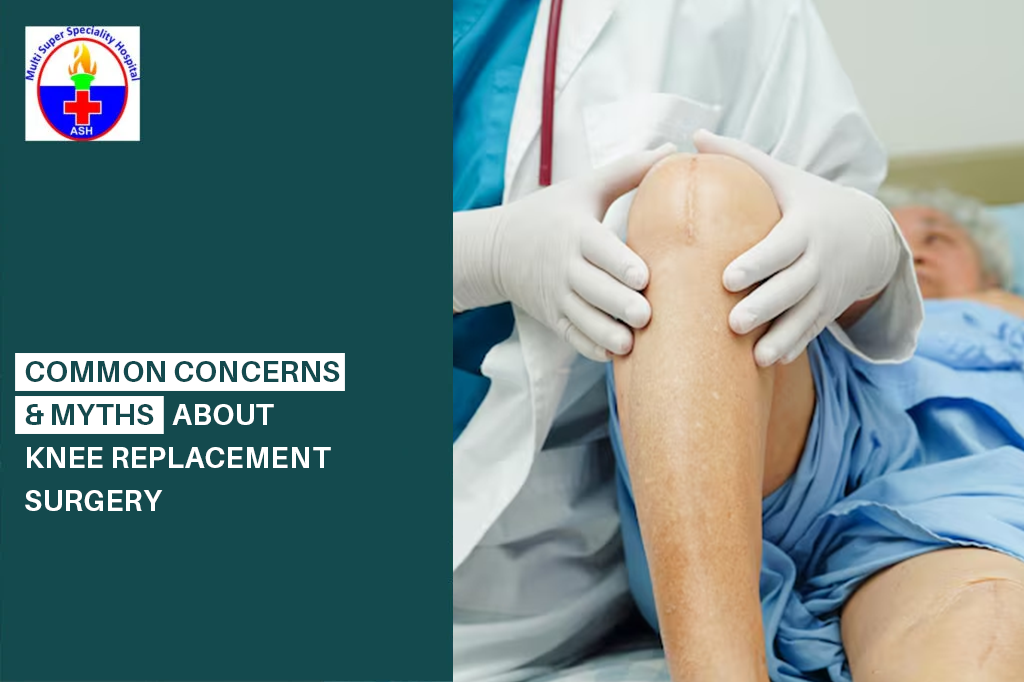
Common Concerns & Myths About Knee Replacement Surgery

Common Concerns & Myths About Knee Replacement Surgery Knee pain is life-changing. It reduces the mobility, interferes with sleep, and even has an impact on emotional well-being. However, there are still a lot of individuals in Ahmedabad who remain victims due to their fears or lack of knowledge about knee replacement operation. Myths can make people not seek timely treatment because of the fear of a long recovery, or because of the fear of its expense, or its danger to the patient. Nevertheless, the current medical technologies, such as Pixee Knee Replacement, have made the operation of the knee safer, quicker, and more accurate than ever. Dr. Rishi Sanghavi, the most successful orthopedic surgeon in Ahmedabad, practicing in Anand Surgical Hospital Pvt. Ltd., is leading this medical transformation in India. He is the sole surgeon in India to have access to the new revolutionary knee surgery, Pixee Knee Plus, a French-made augmented reality (AR) technology. Understanding Knee Replacement Surgery Knee replacement (or total knee arthroplasty) is a medical operation, during which parts of the knee joint that have suffered damage are removed and a synthetic implant is inserted. It is usually prescribed when the arthritis is severe, there is a deformation of the joints, or when the injury restricts movement. Common Myths and the Truth Behind Them 1. “Knee Replacement Is Extremely Painful” Truth: This is one of the greatest fears a patient has yet remains mostly outdated. Most of the pain is eliminated with the use of modern anesthesia, pain management, and minimally invasive surgery such as Pixee Knee Replacement, which starts to recover within days. Many patients are able to walk with help in 24 to 48 hours after the surgery. 2. “It Takes Months to Recover” Truth: The surgical accuracy and post-operative rehabilitation have reduced the recovery period to a considerable degree. In most of the patients, light daily activities are resumed in 3-4 weeks. Assisted physiotherapy provides progressive and harmless development. 3. “Knee Replacements Don’t Last Long” Truth: The current implants can last 20-25 years, or even longer depending on the lifestyle and post-surgical care. The Pixee Knee Replacement has an accuracy of AR that guarantees a perfect alignment of the implant, and this highly increases the durability. 4. “Knee Replacement Surgery Is Risky” Truth: As with any surgery, there is a risk involved; yet, when it is performed by experienced surgeons, complications are unlikely to occur. At Anand Surgical Hospital Pvt. Ltd., Dr. Rishi Sanghavi is a medical expert who integrates pioneering imaging, AR-guided procedures, and sterilization procedures that offer maximum safety and accuracy in all surgical procedures. 5. “The Knee Replacement Cost Is Too High” Truth: Although depending on the kind of implant and technology applied, the knee replacement cost differs, this is much cheaper in Ahmedabad than in most metropolitan areas. It is one of the most valuable health investments to consider the long-term outcomes of the pain relief, mobility, and independence. Why Choose Pixee Knee Replacement? Pixee Knee Plus is a wearable that supports Augmented Reality (AR) to make surgeons view real-time 3D information during surgery. The technology also removes the element of human guesswork and can be used to ensure unison accuracy in the positioning of implants. Key Benefits: It is a next-generation technique that is offered by no one but Dr. Rishi Sanghavi and is the future of orthopedic surgery in Ahmedabad. Trust Expertise, Not Myths You need to clear up the facts, in case you have been postponing surgery because of fear or misinformation. Also, knee replacement is more secure, fast, and accurate than ever, especially with futuristic technologies such as the Pixee Knee Replacement. So, book an appointment with Dr. Rishi Sanghavi and get your knee replaced hassle-free.

Advanced Technology in Knee Replacement Surgery
Knee Replacement

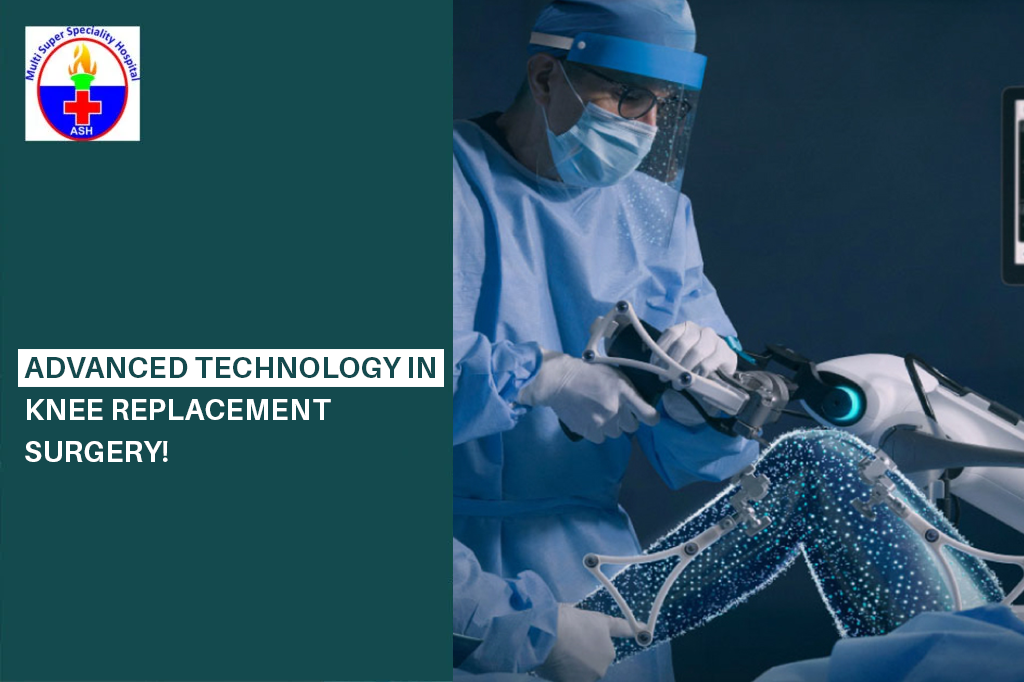
Advanced Technology in Knee Replacement Surgery

Advanced Technology in Knee Replacement Surgery! Over the years, knee replacement surgery has evolved with tremendous change, aiding those patients with extreme pain in their joints and mobility. Through the incorporation of modern technology, the processes have become more accurate and less invasive, and patients can recover at a faster rate. The implants can be aligned and fitted to the specific anatomy of patients, and the modern innovations guarantee better results in the long term. These breakthroughs can be applied in the management of patients in Ahmedabad under the guidance of Dr. Rishi Sanghavi. He is one of the top knee replacement surgeons who has been associated with combining the skills of surgery with the current technological innovations. Historical Development of Knee Replacement Surgery Conventional Surgical Methods. The previous knee replacement surgeries were based on manual procedures. Simple tools and mechanical guides were employed by the surgeons, and the latter resulted in certain complications with perfect alignment. This may lead to unequal wear of the implant, delayed healing, and general poor performance of the knee joint. Migration to Modern Methods. In contemporary knee replacement surgery, computer-assisted and robotic technologies are employed. The techniques enable accurate surgical planning and execution, which traditional methods are unable to do. There is increased success, reduced tissue trauma, and a more natural range of motion in patients after the surgery. Exploring the Latest Technologies! AR in Operation. AR superimposes animated anatomical images on surgery. The surgeons are able to view the knee joint in 3D during the operation. Thus, it enables them to have greater control of the placement of the implants, and they can make better decisions when performing complex procedures. Benefits of AR Increased Accuracy of Surgery: It provides more accuracy in the placement of implants. Educational Resource: Assists in educating new surgeons. Lessens the Irrationalities: Unambiguous imaging will decrease dangers in the field of operation. Computer Navigation Systems Computer navigation systems involve state-of-the-art imaging, e.g., CT and MRI scans, to build an elaborate 3D image of the knee. It allows the surgeon to design a completely unique surgical plan based on the way the patient is anatomically made and the joint condition. Computer navigation has advantages. Tailored Surgical Plans: Everybody gets his/her own plan that is optimized to his/her anatomy. Live Feedback: Surgeons are able to see the progress and make intraoperative changes. Fewer Surgical Errors: Higher accuracy leads to higher functioning of the joint in the long term. 3D-Printed Custom Implants 3D printing makes it possible to create custom implants, which are designed to fit perfectly into the knee structure of the patient. This custom-crafted solution guarantees an increased fit, greater comfort, and natural movement following surgery. Advantages of Implants 3D-Printed. Shorter recovery time: Streamlined design enables a shorter recovery time for the daily operations. Better Long-Term Results: All-on-4 implants lower the morbidity and pain. More durable implants: Precision fit helps to increase the functionality and longevity. Smart Sensors and Wearable Technology To track the recovery of a patient, wearable devices and smart sensors are employed nowadays. These devices monitor the movement, quantify the joint functioning, and identify possible problems in time in order to provide timely interventions in case of necessity. Benefits to the patients and surgeons. Continuous Feedback: This helps the doctors to know the progress because the data is real-time. Patient Engagement: Patients will be more engaged in their rehabilitation process. Better Recovery Results: The timely identification of complications and the rehabilitation process lead to faster recovery. The Future of Knee Replacement Surgery Ongoing Innovations The technology of knee replacement keeps improving with the use of AI in planning, highly developed robotics, and new implant materials. Dr. Rishi Sanghavi is at the forefront of such developments to keep the patients at the advantage of the current techniques. Potential Developments Autonomous Surgical Systems: AI will be able to assist even higher levels of surgical accuracy. Implants that are biocompatible: These are materials that are assimilated into the body. Virtual Reality Rehab Tools: PCR and training to improve post-surgery recovery. Conclusion The knee replacement surgery has also undergone advanced technology that has made the procedure more accurate, customized, and quick. Patients will be able to have the advantage of better joint operation, faster recovery, and long-term outcomes. In terms of getting the innovative surgery in Ahmedabad in order to replace the knee, Dr. Rishi Sanghavi would be the best option because he ensures that he provides the best care with the latest technological advancements.